Last updated on: July 22, 2026
Key Takeaways
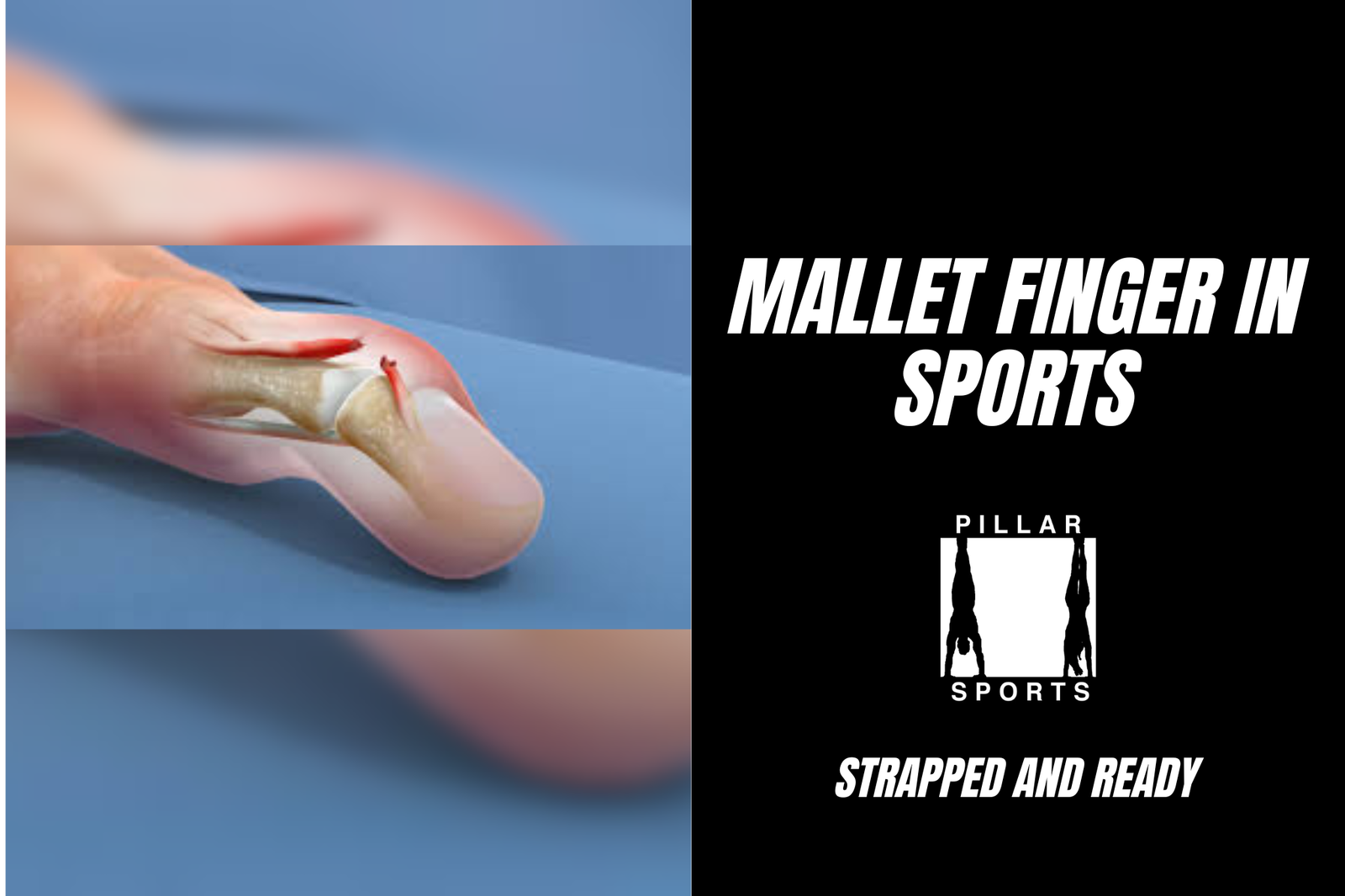
- Mallet finger occurs when the extensor tendon of the finger snaps, preventing straightening of the fingertip.
- To treat mallet finger, keep the DIP joint fully extended 24/7 for about 8 weeks to allow proper healing.
- Use a hard plastic splint for most of the day and switch to rigid tape for better on-court performance during games.
- The mallet finger tape method involves applying tape in a manner that maintains finger extension while preventing hyperextension.
- Rigid tape is preferable for sports as it remains firmly in place and offers support without stretching.
In basketball, “jammed fingers” are a dime a dozen. You go for a steal, the ball hits the tip of your finger, and you shake it off. But sometimes, the finger doesn’t snap back. The tip droops down, and you literally can’t straighten it.
That is not a jam. That is Mallet Finger (also known as “Basketball Finger”).
Looking for a a complete Ultimate Guide for Hand Taping? Read our Blog
💡 Tip: Based in Hong Kong or Singapore? We ship fast — check out our K Tape Hong Kong or K Tape Singapore pages for local pricing and delivery.
It happens when the extensor tendon on the top of your finger snaps or tears away from the bone. In this guide, we’ll break down how to treat mallet finger, the difference between a mallet finger splint vs. tape, and how to strap it up so you can stay on the court.

How to Treat Mallet Finger
The golden rule of Mallet Finger is simple but frustrating: Straighten it and keep it straight.
Because the tendon is disconnected, it cannot pull the fingertip up. If you let the finger bend, the two ends of the tendon move further apart, and it will never heal. To treat it, you must keep the DIP joint (the joint closest to the fingernail) in full extension—completely straight—24 hours a day.
How Long Does Mallet Finger Take to Heal?
This is the patience test.
According to the American Academy of Orthopaedic Surgeons (OrthoInfo), non-surgical treatment typically requires wearing a splint or rigid tape for 8 weeks continuously.
The “Reset” Rule:
This is the most critical part of the OrthoInfo guidelines: “If the joint flexes even for a moment with the splint off, it will disrupt the healing and the process will take longer.”
In other words, if you take your tape off to wash your hands and let the tip droop, your 8-week clock resets to Day 1.
Mallet Finger Splint vs. Tape: What Do You Need?
Most doctors will issue a hard plastic “Stax Splint” that covers the tip of the finger. But for basketball players, this is a dilemma.
| The Splint (Hard Plastic) | The Tape (Rigid Support) |
| Best For: Daily wear (Sleeping, Work, School). | Best For: On-Court Performance (Practice, Games). |
| Pros: Keeps the finger perfectly straight for healing. | Pros: Low profile, better ball feel, and won’t fly off during a game. |
| Cons: Bulky, slippery on the ball, and hard to shoot with. | Cons: Can loosen with sweat; requires precise application. |
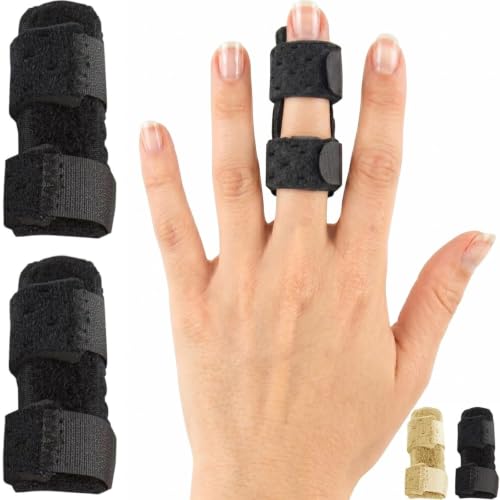
- RECOVER FROM FINGER INJURIES FASTER USING A TRUSTED BRAND: The Vive Universal Finger Splint 2 Pack offers stabilizing su…
- UNIVERSAL FIT FOR ALL FIVE FINGERS: Designed with two adjustable straps, our padded finger splint fits most adult finger…
- COMFORTABLE PAIN-RELIEVING SUPPORT: The finger splint set includes sturdy aluminum splints to provide support post-surge…
The Verdict for Hoopers:
Use the hard splint for the 22 hours of the day you aren’t playing.
Use Mallet Finger Tape (Rigid Zinc-Oxide) for practice and games. Rigid tape allows you to create a custom “cast” that locks the finger straight without the bulk of plastic.
Mallet Finger Tape Method (Step-by-Step)
This method focuses on Dorsal Blocking—placing the tape on the top of the finger to act as an artificial tendon.
While the video below demonstrates this with flexible tape for rehab, as a basketball player, you should use 25mm Rigid Tape to create a stronger, non-stretchy “beam” that acts like a splint.
Here’s a step-by-step guide to applying Dynamic Tape for Mallet Finger, as demonstrated in the video:
- Prepare the Tape and Position the Finger: Start with the middle of the tape and place it underneath the finger, avoiding excessive pressure over the nail bed (1:22). Position the finger in full extension at the DIP joint (1:37).
- Apply for DIP Extension: Bring each end of the tape around the finger and cross them over the back of the DIP joint. This creates an extension moment at the DIP (1:40).
- Apply for PIP Flexion (Optional): If the patient tends to hyperextend at the PIP joint, rotate the hand and gently flex the PIP joint. Continue the tape around the finger to create a flexion moment at the PIP (1:55). This helps prevent swan neck deformity.
- Repeat for the Other Side: Repeat the process with the other side of the tape, bringing it around the flexed PIP joint and sweeping it through (2:22).
- Finish Application: Generally, the tape can be finished on the proximal phalanx (1:17). If needed, you can extend the tape further to discourage flexion at the MCP joint (2:16).
Once applied, the tape will provide a flexion moment at the PIP joint and an extension moment at the DIP joint, discouraging hyperextension while maintaining full DIP extension (2:40).
The Gear: Why Rigid Tape Wins
Elastic tapes (like K-tape) are great for blood flow, but they stretch. When a basketball hits your finger at 30mph, stretch is your enemy.
You need Pillar Sports 25mm Rigid Tape. It has zero give, meaning when you tape that finger straight, it stays straight. Plus, the zinc-oxide adhesive is sweat-resistant, so it won’t slide off in the 4th quarter.
Sources:
- https://orthonj.org/mallet-finger/#:~:text=Drooping%20fingertip%3A%20The%20most%20noticeable,the%20fingertip%20back%20into%20position.
- https://litfl.com/mallet-finger/#:~:text=Discharge%20Advice,DIP%20straight%20during%20this%20process.
- https://orthoinfo.aaos.org/en/diseases–conditions/mallet-finger-baseball-finger/#:~:text=Because%20wearing%20a%20splint%20for,weeks%20to%20monitor%20your%20progress.
- `https://www.assh.org/handcare/condition/mallet-finger#:~:text=If%20the%20joint%20flexes%20even,skin%20dry%20under%20a%20splint.
- https://physioproductskenya.com/injury-help/mallet-finger/#:~:text=Mallet%20Finger%20is%20caused%20by,bone%20from%20the%20distal%20phalanx.