Last updated on: March 10, 2026
Key Takeaways
- Mastering the Hook Grip: In Olympic lifting, the thumb is tucked under the fingers to lock the bar. Without Weight Lifting Hand Tape, the metal knurling will tear your skin, sidelined you from training.
- Friction vs. Stability: Thumb taping is about skin protection and flexibility, while wrist taping provides rigid stability to prevent hyperextension during heavy overhead catches.
- The 50mm Advantage: For high-load lifting, 50mm (2-inch) tape is superior. It offers more surface area to protect the thumb and creates a “wide-bracelet” support for the wrist that won’t cut into your skin like narrow tapes.
- Choose the Right Gear: Use EAB (Elastic Adhesive Bandage) for thumbs to maintain joint mobility. Use Rigid Zinc-Oxide Tape for wrists and custom palm guards to provide maximum, non-stretch support.
- The “No-Slip” Solution: For athletes who sweat heavily or hate sticky residue, Coband (Cohesive Bandage) is the best quick-fix as it sticks only to itself, not your skin.
- Stop Callus Tears: Don’t treat ripped palms as a badge of honor. A custom strap made from 50mm Rigid Tape creates a durable barrier for high-rep pull-ups and toes-to-bar.
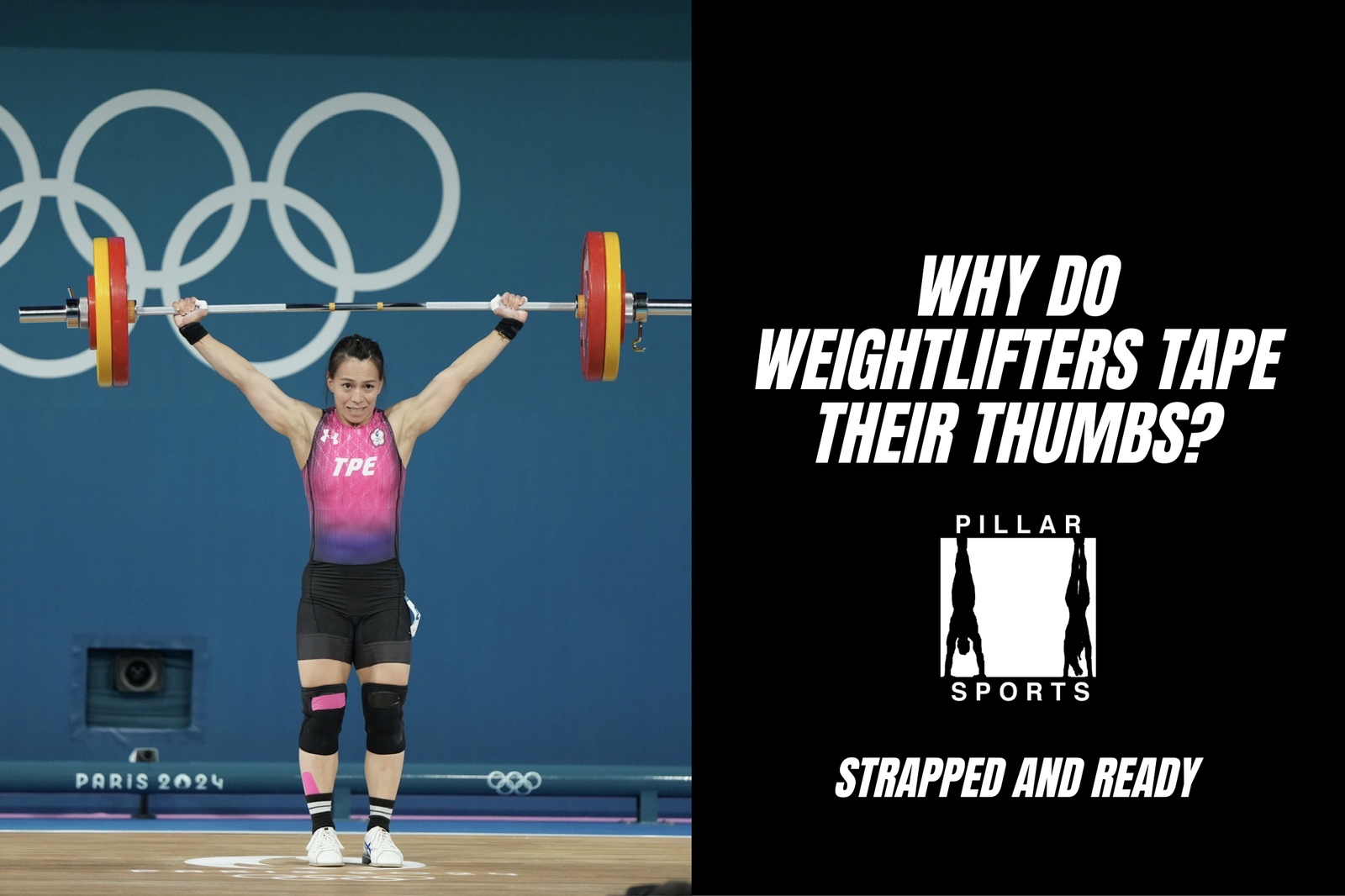
If you watch the Olympics, you’ll notice something about every weightlifter on the platform: their thumbs are mummified.
In Olympic Weightlifting (Snatch and Clean & Jerk), the connection between your hand and the bar is everything. But the friction generated by the barbell can tear the skin off your thumbs in a single heavy session.
This is the Pillar Sports Guide to Weight Lifting Hand Tape. We’ll cover why the “Hook Grip” demands tape, how to use wide 50mm tape for superior wrist stability, and the right way to protect your palms from tears.
Looking for other taping techniques to different sports? read our blog on the Ultimate Guide to Hand Taping which is more broader version of hand taping!
Why Do Weightlifters Tape Their Thumbs?
The reason is the Hook Grip. Unlike a standard deadlift grip where the thumb sits over the fingers, in Olympic lifting, you tuck your thumb under your index and middle fingers.
This locks the bar in place, preventing it from rolling out of your hands during explosive movements. However, it also crushes your thumb against the knurling (the rough metal pattern) of the bar.
Without Weight Lifting Hand Tape, the skin on your thumb will tear, making it impossible to train the next day.
Expert Insight: According to Greg Everett of Catalyst Athletics, arguably the most respected voice in American weightlifting: “Taping the thumb is not about stability; it is about friction and skin protection. You need a tape that is flexible enough to bend, but sticky enough to stay put.”

How to Tape for the Hook Grip (Video Tutorial)
For the ultimate Hook Grip comfort, you don’t want a thin strip that cuts into your skin. You want coverage. This is where 50mm wide tape becomes your best friend.
The Gear You Need:
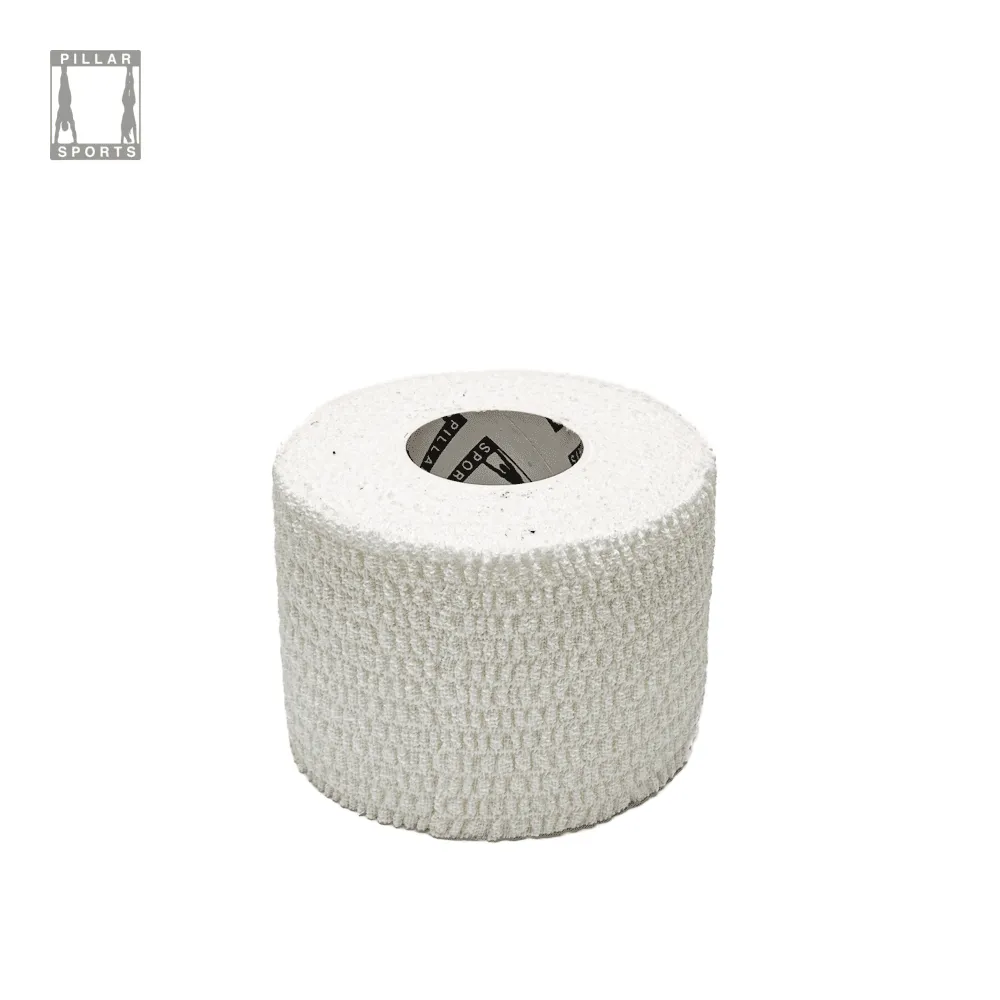
The Pro Choice: Pillar Sports EAB 50mm
Because it’s wider, a single strip covers your entire thumb knuckle. It stretches with your grip, giving you protection without killing your thumb’s mobility.
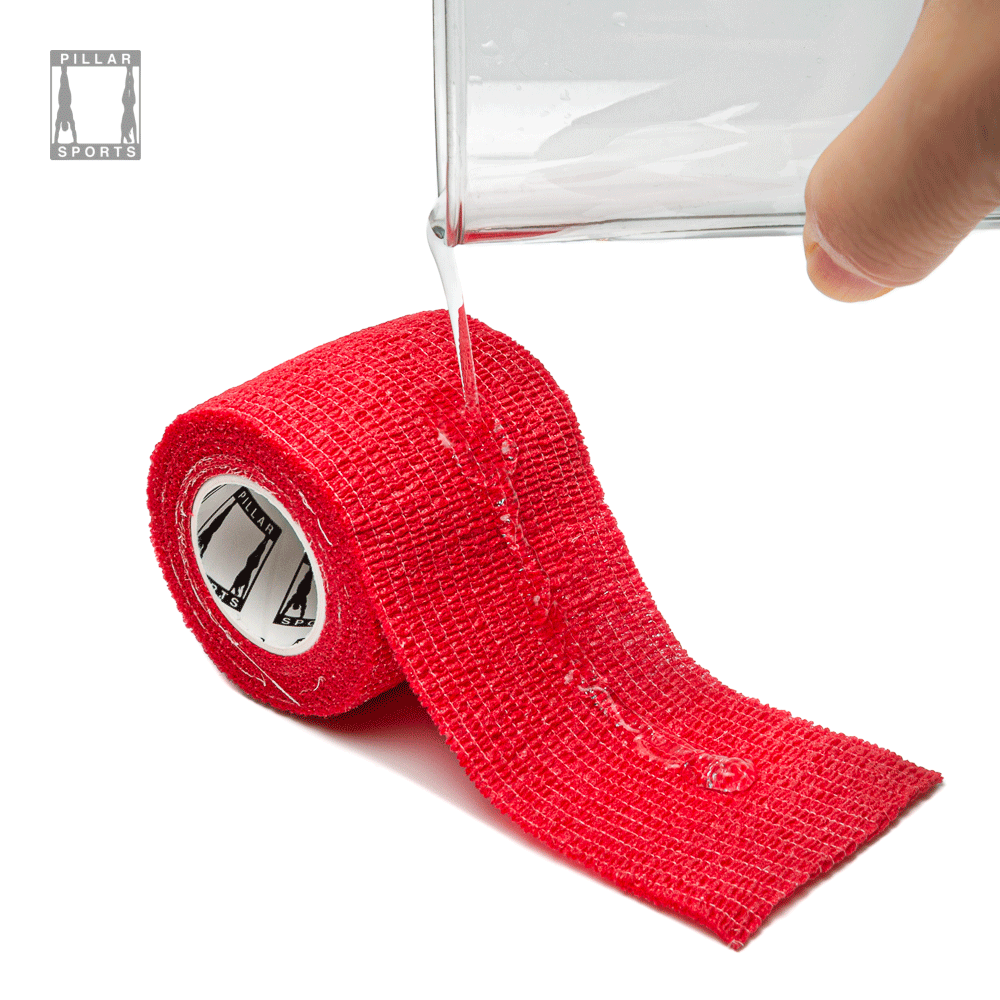
The Quick Fix: Pillar Sports Coband 50mm
Hate sticky residue? Coband (Cohesive Bandage) sticks only to itself, not your skin. Wrap it once around your thumb for a reusable, sweat-proof shield that comes off in seconds after your set.
This video provides a quick guide on how to use stretchy athletic thumb tape for weightlifting, CrossFit, hook grip, and pull-ups (0:05). The tape protects your thumbs while maintaining mobility (0:08).
Here’s how to apply the thumb tape:
- Pinch the tape between your thumb and finger (0:14).
- Wrap it around your thumb once (0:17).
- Bend your thumb and wrap the tape a second time (0:20).
- Tear it off (no scissors needed) (0:25).
Once applied, the tape will be tight and ready to protect your hand, allowing you to maintain mobility for activities like a hook grip or holding onto a pull-up bar (0:28-0:34).
How to Use Hand Wraps for Lifting (Wrists)
While the thumb needs flexible tape, the wrist needs Rigid Stability.
When you catch a heavy Clean or hold a Snatch overhead, your wrist is forced into extension. If your wrist bends too far back, you lose power and risk a sprain.
Wraps vs. Tape:
- Wrist Wraps: Thick cloth/velcro wraps used for maximum support on max-effort lifts.
- Rigid Tape: Used by lifters who prefer a lower profile or specific “check-rein” support.
How to Wrap Hands for Weightlifting (Step-by-Step)
When you are catching 100kg+ overhead, you don’t want your wrist to wobble. Thin tape can feel like “string” under heavy load.
The Heavy Lifter’s Secret: Pillar Sports Rigid 50mm
Unlike standard 38mm tape, the 50mm width acts like a wide supportive bracelet. It distributes the pressure over a larger area of your wrist, preventing the tape from cutting into your skin while providing the maximum “cast-like” stability you need for PR attempts.
Meghan Cerjan, a UK Healthcare athletic trainer, demonstrates an easy wrist-taping technique for athletes (0:11). She covers the materials needed, the taping process, and the benefits of wrist taping for different sports and injury recovery (1:40).
Here’s a step-by-step guide to wrist taping:
- Prepare with pre-wrap (0:25): Start at the base of the wrist and continuously wrap the pre-wrap around to protect the skin from the tape and ensure comfort.
- Apply white tape in C-strips (0:47): Using rigid white tape, apply individual C-shaped strips around the wrist, starting at the base where the pre-wrap began. Athletes may prefer different heights of tape depending on their preference.
- Finish with continuous tape (1:25): Complete the taping by wrapping the white tape continuously around the wrist to secure the C-strips and create a neat finish. Ensure there are no wrinkles or creases.
- Adjust for flexibility or stability (1:40):
- For athletes who throw or catch, a more flexible tape job is preferred for mobility.
- For athletes who block or need more stability (like linemen), extending the tape through the hand can provide additional support and reduce wrist “flappiness.”
Wrist taping can also be used as a “feel-good remedy” (2:22) for athletes recovering from sprains or other wrist injuries, offering a sense of security and strength.
Palm Protection: Tearing is Not a Badge of Honor
CrossFitters and weightlifters often tear the skin on their palms (callus tears) during high-rep pull-ups or toes-to-bar.
You don’t need full gloves (which ruin your grip feel). You need a Custom Palm Guard.
How to make it: You need a wide base to cover your callus line. Pillar Sports Rigid 50mm is the perfect width for this. Standard narrow tape will roll up and expose your skin.
- Take a strip of Rigid 50mm (measuring from wrist to fingertip length).
- Fold it lengthwise to create a custom strap.
- The 50mm width ensures the strap is durable enough to survive hundreds of pull-ups without snapping.
Scientific Sources & Professional Guidelines
We base our taping advice on the standards set by national governing bodies:
Equip Your Gym Bag
Don’t let a torn thumb ruin your snatch session.
- For Hook Grip: Shop EAB 50mm Tape
- For Quick Protection: Shop Coband 50mm Tape
- For Heavy Wrists: Shop Rigid 50mm Tape