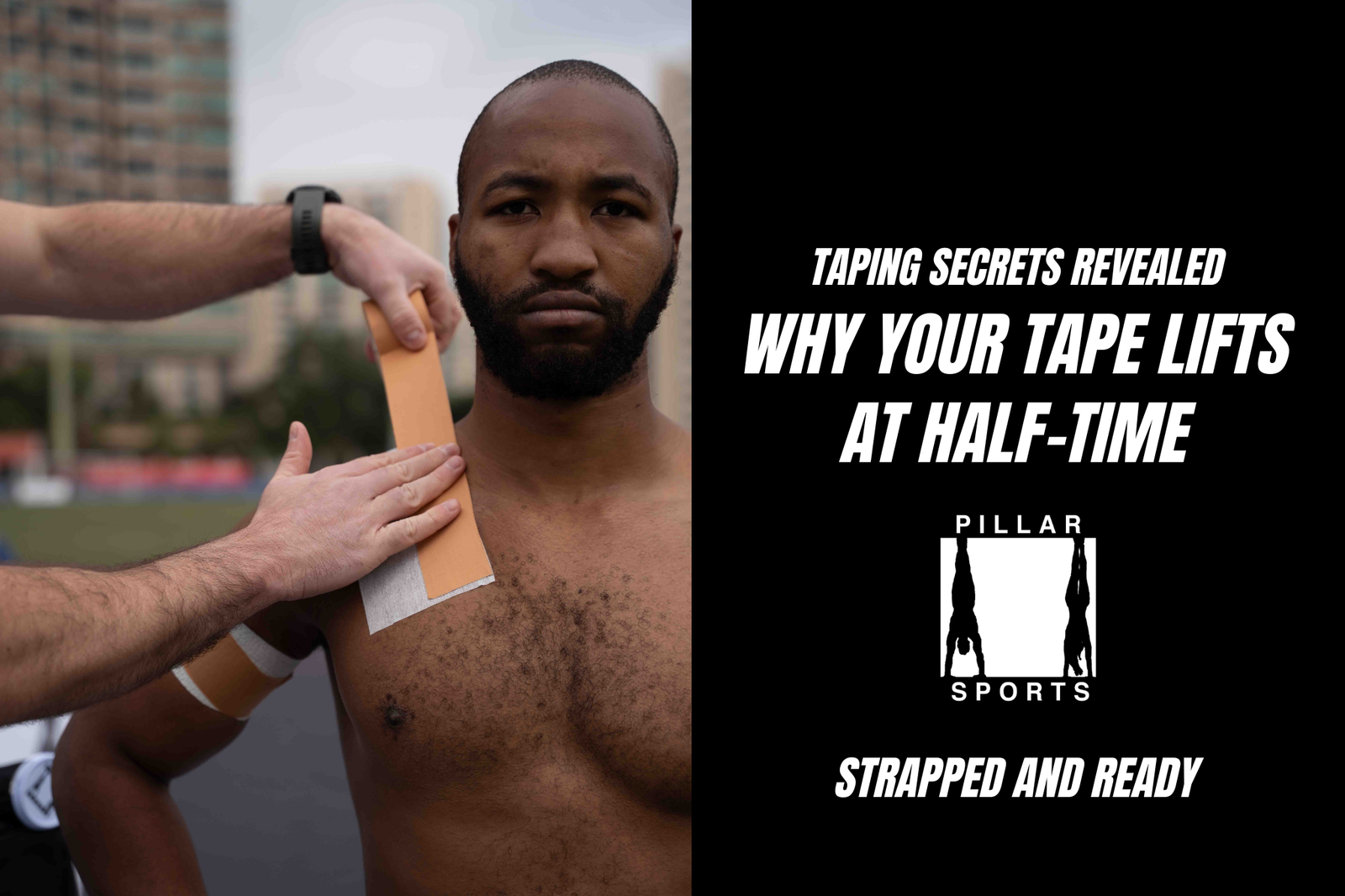
Most athletes learn to tape from a teammate who learned from another teammate. The technique gets passed down in changing rooms and pitchside warmups — some of it solid, a lot of it not. The result: tape jobs that look fine but lift at half-time, cut circulation, or come off painfully during removal.
These are the tips that physios and experienced sports trainers apply every session. Three phases: before you tape, while you tape, and when you take it off.
Phase 1 — Pre-Application: Set the Foundation
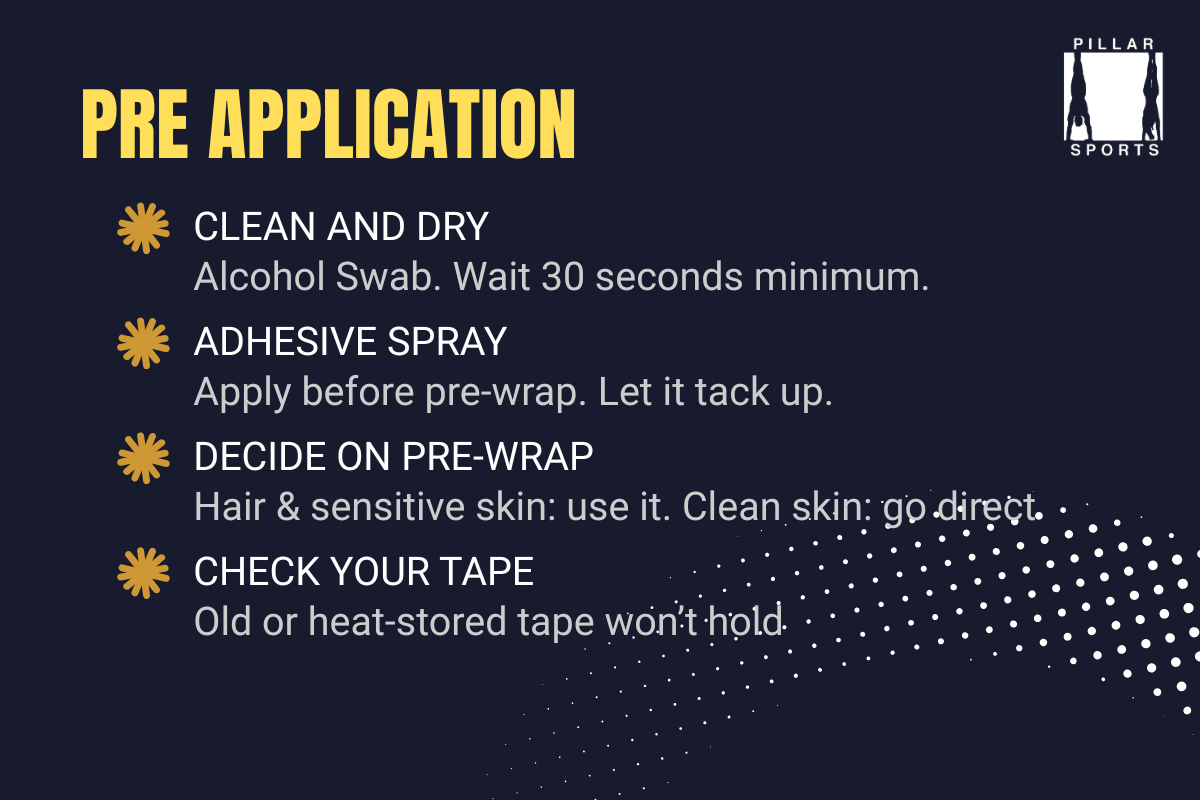
Skin preparation decides how well your tape performs. Skip it and everything else is compromised.
- Clean and dry the skin first. Sweat and skin oil are the number-one cause of early tape failure — especially in Hong Kong and Singapore heat. Wipe down with an alcohol swab or pre-tape skin wipe and wait for it to fully dry. In humidity, give it at least 30 seconds. Not five.
- Use adhesive spray in hot or wet conditions. A pre-tape adhesive spray (like USL ADHESIVE TAPE SPRAY BY GRIPTEC) dramatically extends tape life on sweaty skin. Apply it before any pre-wrap or direct taping, let it get tacky, then tape over. Physios use this on every job. Most club athletes have never heard of it.
- Decide on pre-wrap before you start. Foam underwrap under rigid tape protects skin and body hair, making removal much less painful — but it reduces adhesion.
On clean, lightly-haired skin with adhesive spray, going direct is stronger.
On heavily-haired areas or for athletes with sensitive skin, pre-wrap is the right call.
Make the choice before you start, not halfway through.
- Check the tape is in date. Tape stored in a hot changing room over summer or past its expiry loses adhesion from the roll. If it’s not sticking cleanly when you unroll it, it won’t hold during play. Keep a fresh roll in your kit bag.
💡 Pro Tip: USL Adhesive Tape Spray by GripTec applied directly to skin before rigid tape is standard in professional sport and almost unheard of at club level. It significantly improves adhesion on high-sweat areas like ankles and wrists. A small bottle of USL Adhesive Tape Spray by GripTec belongs in every serious athlete’s kit bag.
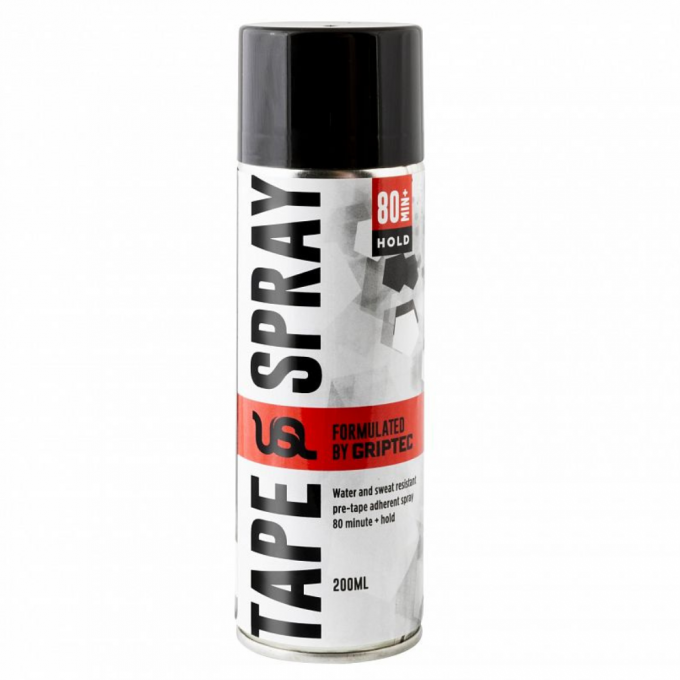
USL Adhesive Tape Spray by GripTec
Phase 2 — Application: What the Pros Do Differently
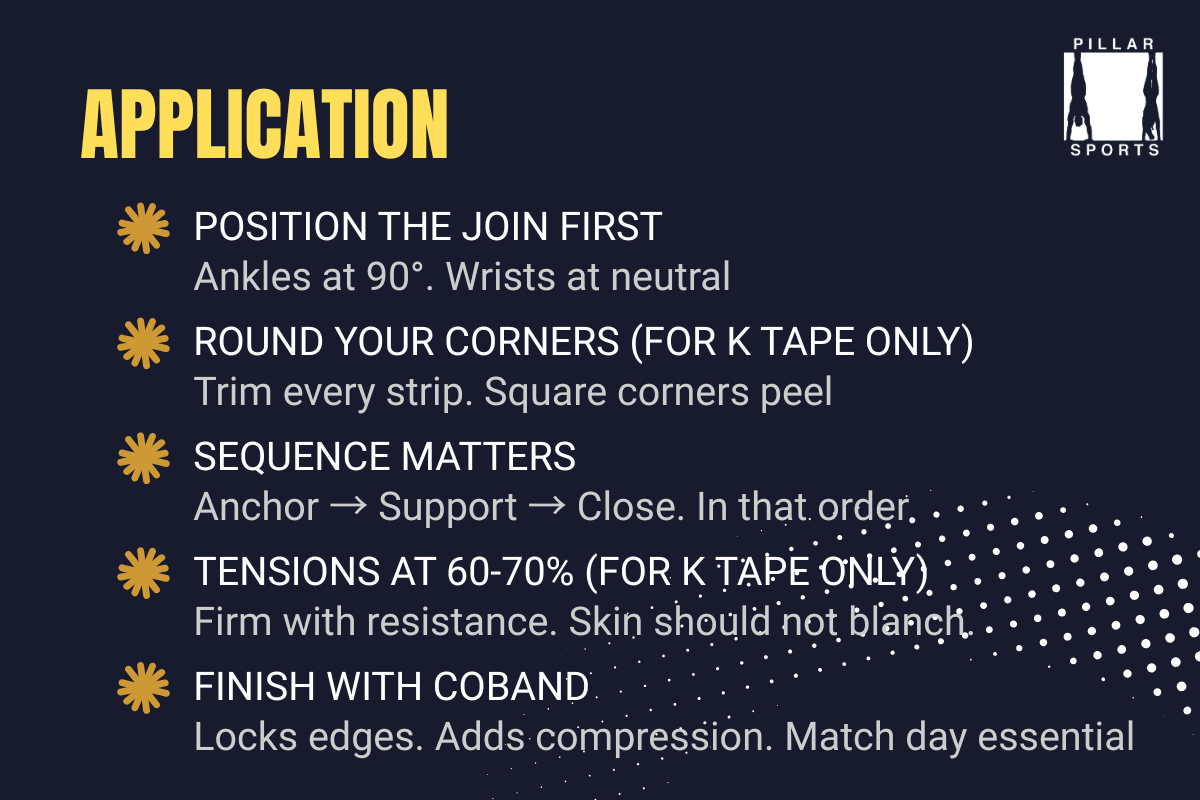
- Position the joint correctly before the first strip goes on. For ankles, tape at 90 degrees — neutral, not with toes pointed. Taping plantarflexed locks in less functional protection and restricts walking range. For wrists, hold the neutral position you’ll be moving in, not a resting angle.
- For Kinesiology tape – Round your corners. Take two seconds to trim the corners off every strip before applying. Square corners catch and peel. This single habit adds significant wear time and costs you nothing.
- Anchor first, support second, close last. Anchor strips go on non-moving skin above and below the joint. Support strips do the structural work, running in the direction that limits the movement you’re preventing. Closing strips lock the edges down — overlap by at least 50%. Getting this order wrong undermines the whole structure.
- Tension is where most athletes go wrong. Tighter does not mean more supported. For Kinesiology Tape, target around 60–70% of full stretch — firm with resistance, but the surrounding skin should not be pulling or blanching. After applying, have the athlete attempt the movement you’re restricting. They should feel the tape catch at the endpoint, not dig in at rest.
- Finish with coband on match day. A coband layer over rigid tape on ankles and wrists is a pro finishing move. The rigid tape does the structural work; the coband locks down edges that would otherwise lift under boot contact or friction. Apply with light, even tension — coband compresses as it sets. If the athlete feels tingling or numbness within a couple of minutes, you’ve gone too tight. Unwrap and reapply.
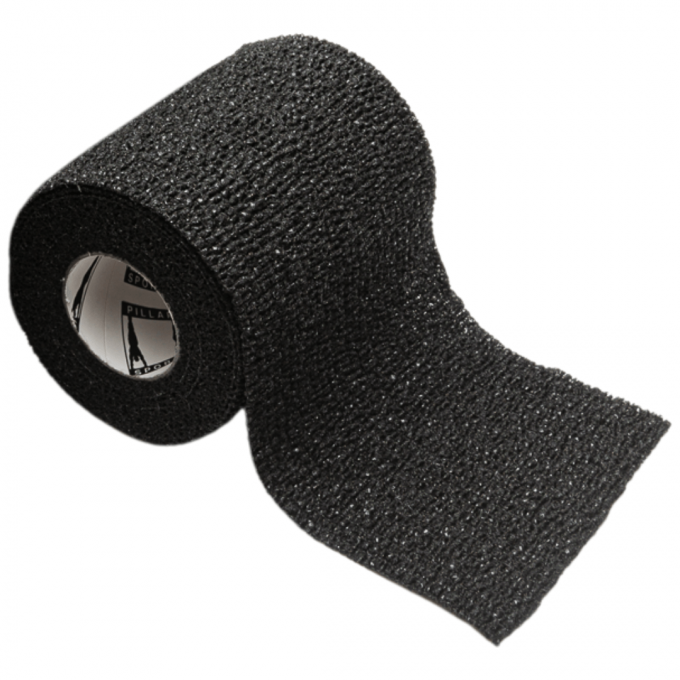
Pro Coband
The Pillar Sports Pro Coband is a premium, reusable cohesive bandage engineered for heavy-duty compression…
🎯 For turf sports: Turf tape on forearms, and shins protects skin from repeated contact with artificial surfaces — a separate job from joint support. Pillar Sports Protec+ Turf Tape is built for this: durable enough for repeated surface contact, thin enough not to affect grip. Use code MAY2026 for 20% off this May 2026.
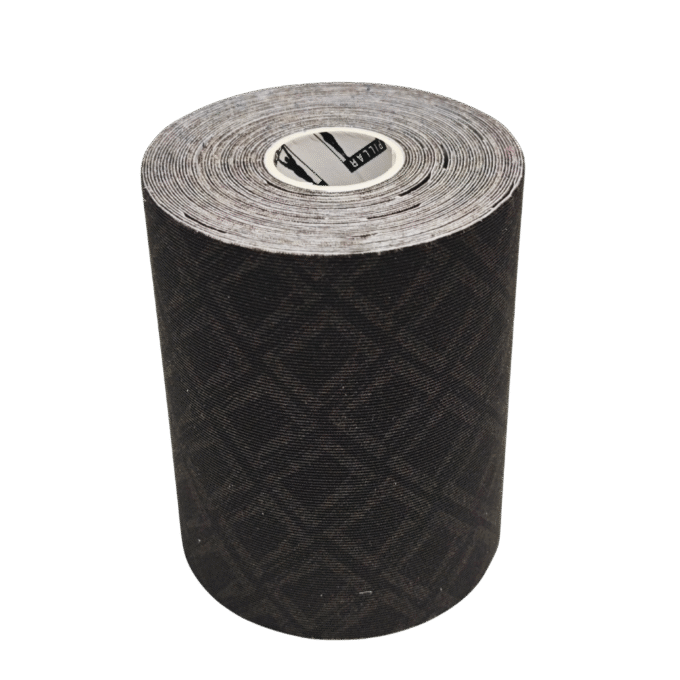
Protec+ Turf Tape
Stay fearless on the field. ProTec+ Turf Tape shields your skin from burns and scrapes…
Phase 3 — Removal: How to Take It Off Without the Damage
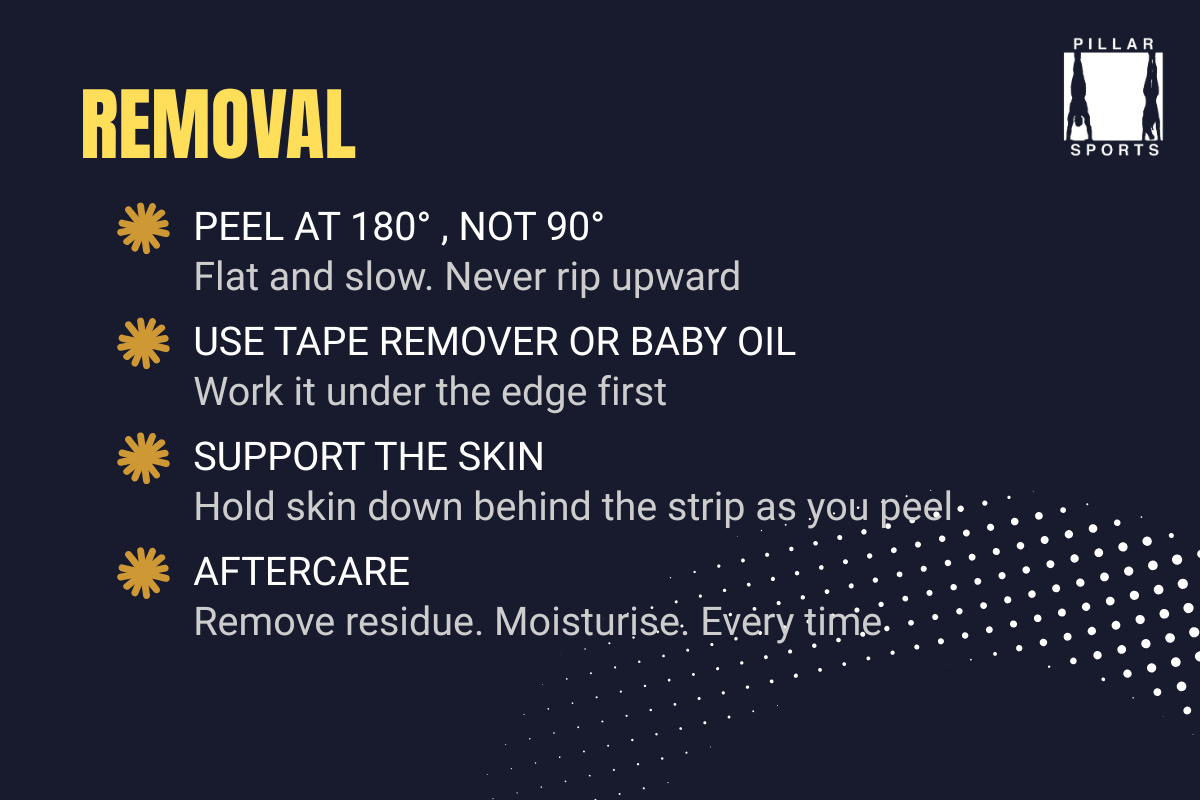
Removal done wrong causes more skin damage than the application itself.
This is especially true for rigid tape applied directly to skin.
- Never rip tape off quickly or at a 90-degree angle. The correct technique is slow, parallel removal — peel the tape back on itself at a flat angle (180 degrees to the skin), not yanked upward. Go slow. Fast removal tears skin surface.
- Use tape remover or baby oil on direct skin applications. A few drops of tape-removal solvent or plain baby oil worked under the leading edge before you peel dramatically reduces friction and protects the skin. Particularly important for hairy areas.
- Support the skin as you go. Use your free hand to press and hold the skin behind the strip as you peel forward. This prevents the skin from being pulled and stretched ahead of the tape’s edge — a common cause of skin tears, especially on older athletes or sensitive skin.
- Don’t skip aftercare. After removal, wipe the area clean to remove adhesive residue, then moisturise. Skin that’s been under rigid tape for two or more hours has been stressed. Leaving residue on the skin causes irritation under the next tape application.
💡 Pro Tip: If tape has been on for an extended period — post-match, overnight — soaking in warm water first (shower or bath) softens the adhesive and makes every step of removal easier and less painful.
The Short Version
A tape job that works all the way through to full-time comes down to three things: clean, prepped skin before you start; correct joint position and proper tension during application; and slow, supported removal at the end. Get the fundamentals right and the tape does its job.
For athletes in Hong Kong and Singapore, Pillar Sports stocks professional-grade rigid tape, coband, and turf tape — available now with fast local shipping. Pillar Sports Protec+ Turf Tape — use code MAY2026 for 20% off this May.
Related Searches
sports tape application tips how to apply sports tape correctly how to remove sports tape without pain pre-tape skin preparation sports taping technique pro tips how to tape an ankle for sport sports tape Hong Kong Singapore