Last updated on: September 23, 2026
Rugby players commonly use rigid zinc oxide tape on their fingers, thumbs, wrists and ankles. Unlike elastic kinesiology tape, rigid rugby tape has little or no stretch, making it suitable for applications designed to limit particular movements and provide firm external support.
The right tape depends on the body area. Narrower 25 mm tape is generally easier to use around fingers and thumbs, while 38 mm tape is commonly used for ankle and larger joint applications.
This guide explains what tape rugby players use, why fingers and thumbs are frequently taped, how zinc oxide tape differs from elastic sports tape and which width to consider for each application.
If you are taping an injury or returning to rugby following an injury, seek guidance from a qualified healthcare professional before playing.
What Tape Do Rugby Players Use?
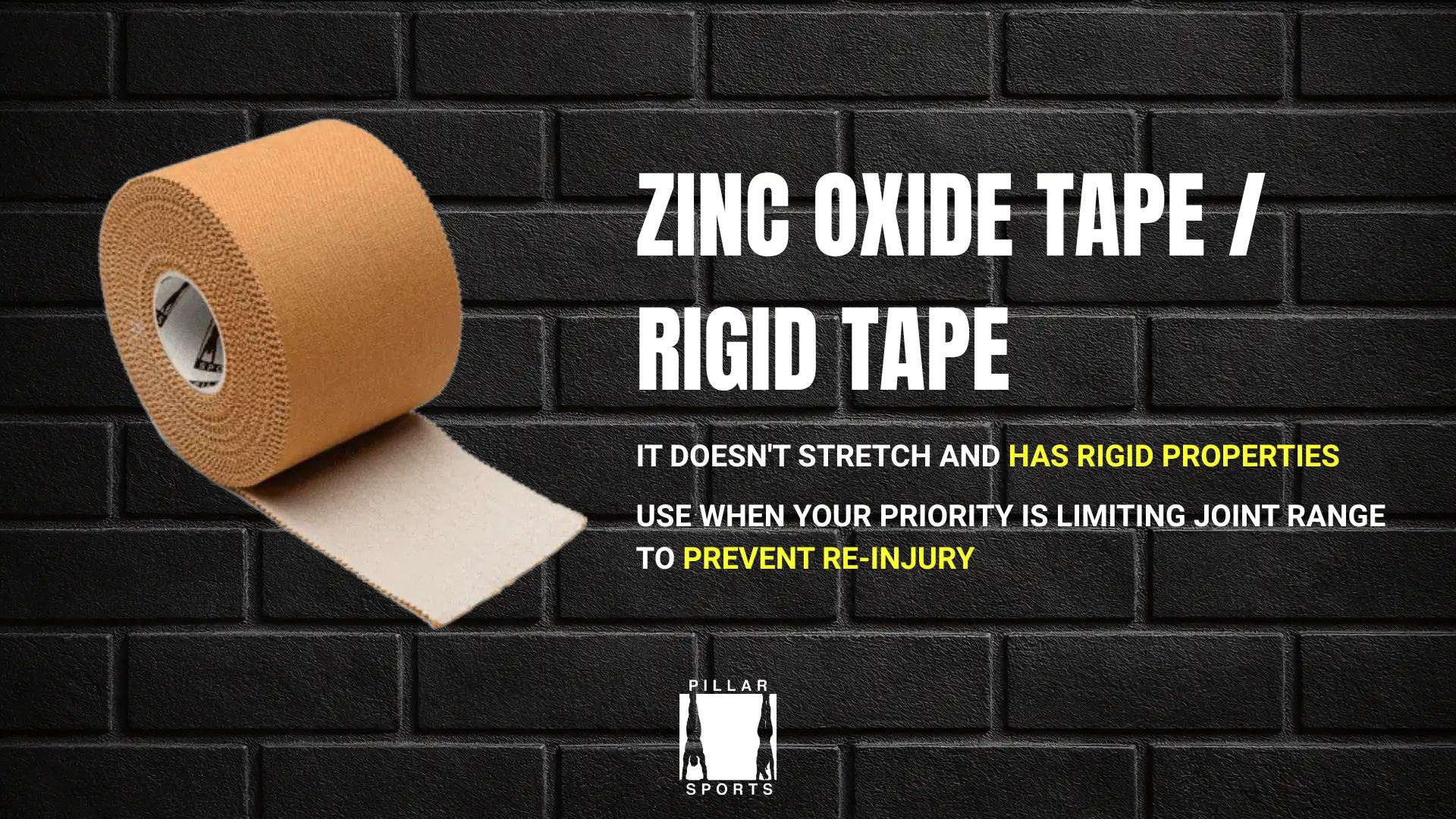
Rigid zinc oxide tape is one of the most common tapes used in rugby. Its non-stretch construction makes it suitable for applications where the goal is to limit unwanted movement around a finger, thumb, wrist or ankle.
Rugby players may also use other types of tape:
- Rigid zinc oxide tape: Firm, non-stretch tape commonly used for fingers, thumbs, wrists and ankles
- Elastic adhesive bandage: Stretchable tape used where support and flexibility are both required
- Kinesiology tape: Elastic tape designed to move with the body
- Cohesive wrap: Flexible wrap that sticks to itself rather than directly to the skin
- Underwrap or an adhesive underlayer: Used in some applications to reduce direct contact between rigid tape and the skin
For finger, thumb and ankle applications requiring firm restriction, rigid zinc oxide tape is usually the most relevant option. The correct application still depends on the athlete and the purpose of the taping.
If you’re unsure where zinc oxide tape sits in relation to other taping options, the Sports Taping Guide: 5 Types Every Athlete Should Know gives a clear breakdown of when each type is the right call.
Which Rugby Tape Should You Choose?
| Application | Tape to consider | Common width |
|---|---|---|
| Finger taping | Rigid zinc oxide tape | 25 mm |
| Thumb support | Rigid zinc oxide tape | 25 mm |
| Wrist support | Rigid zinc oxide tape | 25 mm or 38 mm, depending on the technique |
| Ankle strapping | Rigid zinc oxide tape | 38 mm |
| Larger joint applications | Rigid zinc oxide tape | 38 mm or 50 mm |
| Skin protection beneath rigid tape | Foam underwrap or an appropriate adhesive underlayer | Depends on the application |
These widths are general guidelines. Tape selection and technique should be adjusted for the athlete, body area and level of support required.
Before Applying Rugby Tape
Good preparation helps the tape adhere and reduces avoidable skin problems.
- Start with clean, dry skin free from sweat, oil, moisturiser and liniment.
- Do not apply tape over broken, infected or irritated skin.
- Check whether the athlete has previously reacted to sports tape or adhesive.
- Use an appropriate underlayer when required by the technique or the athlete’s skin needs.
- Apply tape smoothly and avoid wrinkles or folded edges.
- Do not pull rigid tape as tightly as possible. Excessive tension may affect comfort and circulation.
- Leave fingertips or toes visible where practical so circulation and sensation can be checked.
- Remove the tape immediately if the athlete develops numbness, tingling, unusual colour change or increasing pain.
Taping an injured joint requires more than wrapping it tightly. If you are unsure about the injury or technique, ask a qualified physiotherapist or healthcare professional.
Why Do Rugby Players Tape Their Fingers?
Rugby players tape their fingers for several reasons. Some use tape to support a previously injured joint, limit uncomfortable movement or buddy-tape one finger to another. Others use it to protect vulnerable areas during repeated tackling, gripping and contact.
Finger tape should not prevent normal circulation or remove so much movement that the player cannot safely grip and handle the ball. A painful, deformed, badly swollen or unstable finger should be assessed before it is taped for play.
For finger applications, 25 mm rigid zinc oxide tape is generally easier to position than wider ankle tape.
Buddy Taping for a Damaged Finger
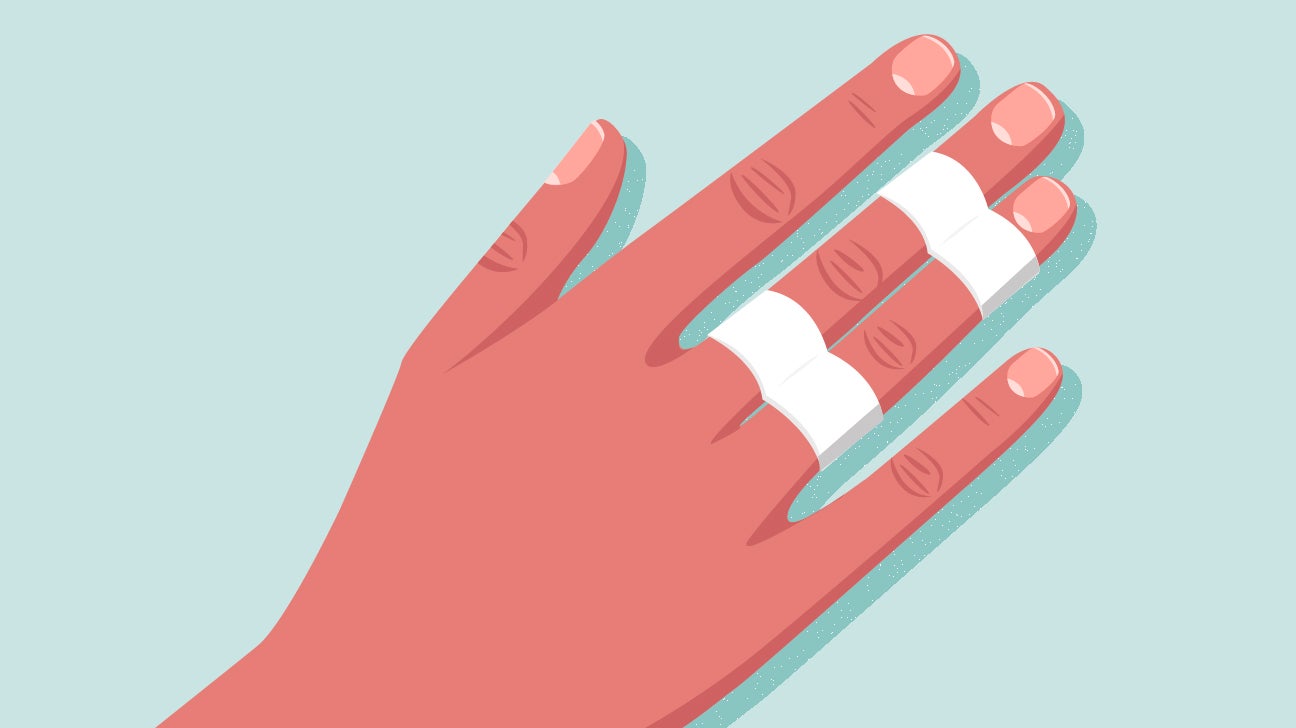
Buddy taping connects an injured finger to the adjacent healthy finger, using it as a natural splint. This is the most common hand taping technique for rugby players dealing with a sprained or previously fractured finger.
- Lay a strip of thin pre-wrap or foam between the two fingers to prevent skin-on-skin irritation.
- Cut two strips of zinc oxide tape — approximately 20cm each — and wrap them around both fingers together, one strip above the middle joint, one strip below.
- Leave the fingertip exposed so you can check circulation.
- The wraps should sit firmly enough that the fingers don’t move independently, but loose enough that you can still feel the ball.
Reinforcing a Healthy Finger Against Hyperextension
If you have a finger that has hyperextended before and you want to prevent a repeat, a single reinforcement strip along the back of the finger joint adds resistance against backward bending.
- Bend the finger very slightly — just past neutral — before taping.
- Apply a short strip of zinc oxide tape along the back of the knuckle joint, anchoring to the finger above and below.
- This creates a mechanical stop that resists hyperextension without restricting grip.
For more detail on hand taping approaches across fingers, thumbs, and wrists, The Ultimate Guide to Hand Taping: Fingers, Thumbs & Wrists covers the full range of techniques.
How Is Rugby Tape Used Around the Thumb?
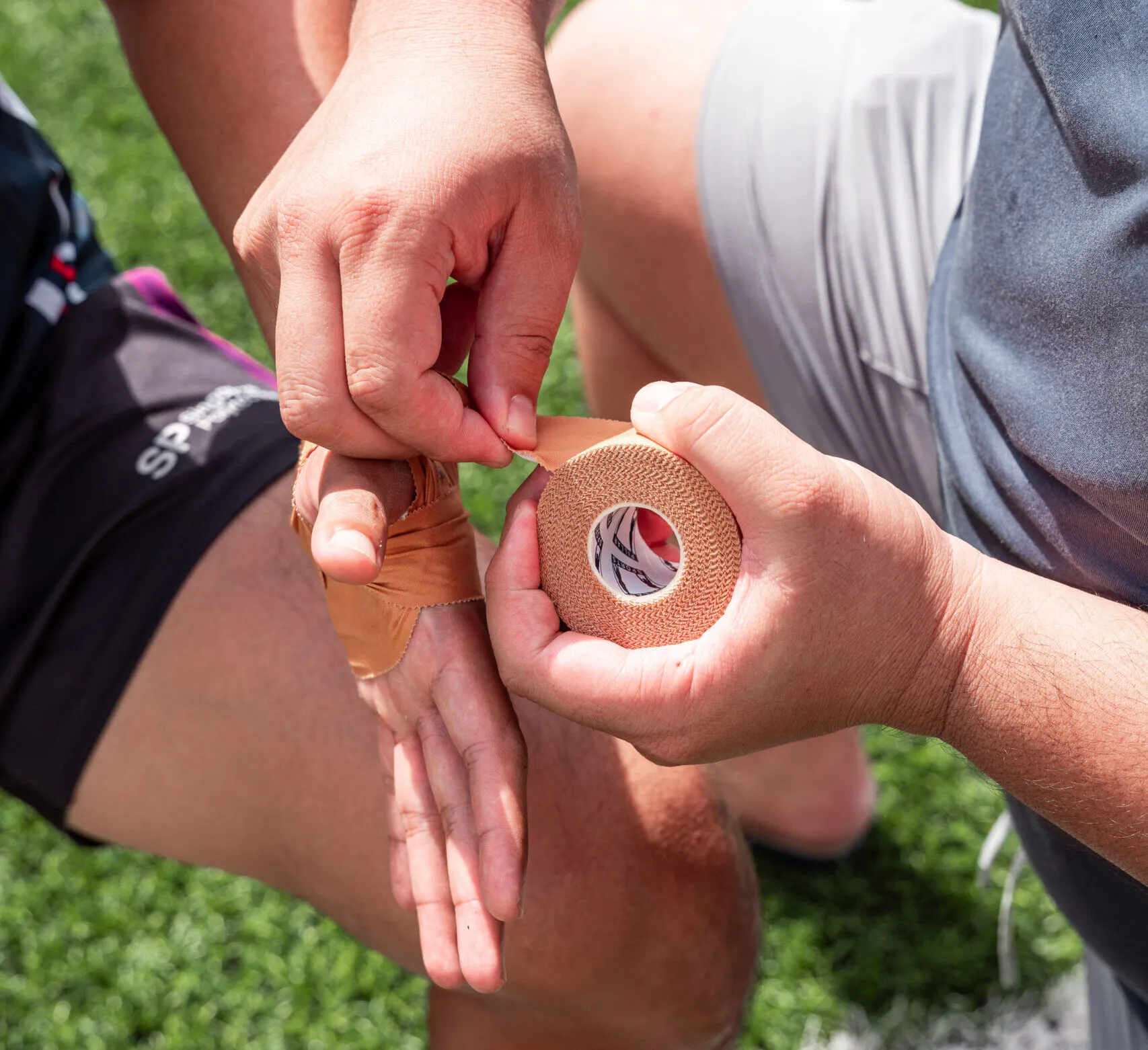
Thumb taping is common in rugby because tackling, falling and ball handling can force the thumb away from the hand. Rigid zinc oxide tape may be used in an application designed to limit that movement while retaining enough freedom to grip and pass the ball.
Thumb pain or instability can indicate an injury that requires assessment. Tape should not be used to disguise a significant injury or force an athlete back onto the pitch.
For most thumb applications, 25 mm rigid tape is easier to position around the hand than wider ankle tape. See our detailed thumb-taping guide for the full technique.
Basic Thumb Taping Technique
- Start with an anchor strip around the wrist — two or three wraps of zinc oxide tape, laid flat without wrinkles, applied at moderate tension.
- Run a strip from the anchor up along the palm side of the thumb, over the tip, and back down the back of the thumb to the anchor. This is your first support strip.
- Add a second support strip on the lateral side of the thumb — the side that faces away from the hand — running from the wrist anchor to just above the joint.
- Lock everything in with a final wrap around the base of the thumb, connecting both support strips.
The goal is to limit sideways movement at the metacarpophalangeal joint (the base joint of the thumb) while still allowing you to grip, catch, and pass with reasonable freedom.
For a full technique breakdown with visual guidance, Thumb Taping for Hyperextension Support covers this in more depth, including variations for players with more significant instability.
Zinc Oxide Rugby Tape for Ankles
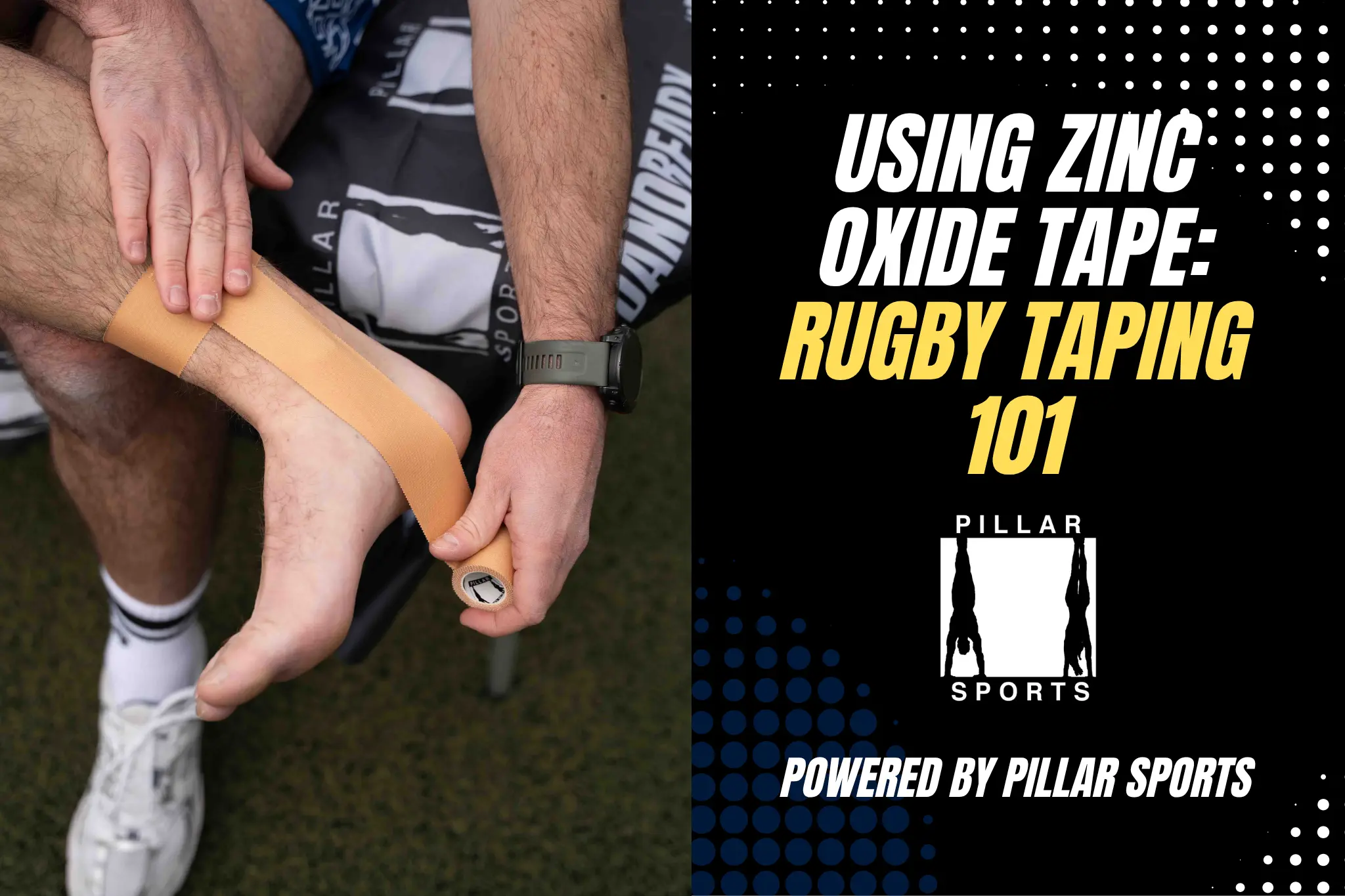
Rugby involves running, cutting, tackling and landing on crowded or uneven surfaces. Rigid zinc oxide tape is commonly used in ankle-taping applications intended to limit excessive movement while allowing the athlete to run.
Ankle strapping is more technical than basic finger taping. Poor application may provide inadequate support or create pressure in the wrong areas, so learn the technique from a qualified practitioner before relying on it during competition.
A 38 mm rigid tape is commonly used for ankle applications. Foam underwrap, adhesive underlayer and heel-and-lace pads may also be used depending on the technique and the athlete’s skin.
Closed Basketweave Ankle Taping
The closed basketweave is the most widely used zinc oxide ankle taping technique in sport. It provides firm restriction against inversion while preserving enough dorsiflexion to run and change direction.
Materials: 38mm zinc oxide tape, foam pre-wrap, heel and lace pads/ pre wrap or hypo fix-it tape (optional).
- Apply pre-wrap from the base of the toes to just below the calf. Keep it smooth and wrinkle-free.
- Lay two anchor strips at the top of the pre-wrap, just below the widest point of the calf.
- Apply stirrups: three strips running from the anchor on the inside of the ankle, under the heel, and up to the anchor on the outside. Each stirrup should overlap the previous one by roughly a third of its width.
- Apply horseshoes: three strips running horizontally from the front of the ankle, around the back of the heel, closing on the other side. These lock the stirrups in place.
- Close with two or three final anchor wraps at the top.
Ankle taping is one area where technique genuinely matters. Done wrong, it can actually increase the risk of certain injuries by restricting motion unevenly. How to Sports Tape an Ankle has a step-by-step breakdown worth working through before your next session. If you’ve been taping your own ankles for a while, 5 Common Ankle Taping Mistakes is worth reading — most club players are making at least one of them.
How to Choose Zinc Oxide Tape for Rugby
Width
Use a width suited to the body area and technique. A 25 mm tape is commonly used around fingers and thumbs. A 38 mm tape is commonly used for ankles and broader joint applications. A 50 mm option may suit some larger-area applications.
Backing Material
Rigid sports tapes may use cotton, rayon or another non-stretch backing. Check the product specifications for tensile strength, breathability, tear method and intended use. The best option depends on the application and playing conditions—not the material name alone.
Adhesive and Playing Conditions
Consider sweat, rain, friction and the duration of the session. Check whether the product is described as sweat-resistant or water-resistant and follow its wear instructions. More aggressive adhesion is not automatically better, particularly for athletes who tape frequently or have sensitive skin.
Standard or Professional-Grade Tape
Standard rigid tape may be suitable for routine training and match applications. A professional-grade tape may offer different tensile, adhesive or water-resistance characteristics. Compare the specifications and choose according to the athlete and playing conditions.
For a detailed look at how pro-grade rigid tape compares to standard rigid tape across these variables, Pro Rigid vs. Standard Rigid: Which Tape Do You Actually Need? gives a direct comparison built for athletes making buying decisions.
Buying Rugby Tape?
Buying tape for yourself? Shop Pillar Sports Rigid Tape in 25 mm, 38 mm and 50 mm widths.
Looking for white 38 mm zinc oxide tape? View Pillar Sports White Zinc Oxide Tape.
Supplying a rugby club, school or medical team? Explore bulk sports tape supply for recurring orders and team requirements.
Frequently Asked Questions
Rugby players commonly use rigid zinc oxide tape for fingers, thumbs, wrists and ankles. Elastic adhesive bandage, cohesive wrap and kinesiology tape may be used for different purposes.
Players may tape their fingers to support a previously injured joint, limit unwanted movement, buddy-tape adjacent fingers or protect vulnerable areas during contact. Tape should not be used to hide a serious finger injury.
A 25 mm rigid tape is commonly used for fingers and thumbs. A 38 mm tape is commonly used for ankle strapping, while larger widths may suit broader applications.
“Rugby tape” is an informal name rather than one specific product. In many cases, players are referring to rigid sports tape with a zinc oxide adhesive.
The two tapes behave differently. Rigid tape is used when an application requires movement restriction, while kinesiology tape stretches and moves with the body. One is not a direct replacement for the other.
Choose Rugby Tape for the Application
Rugby players use different tapes for different jobs, but rigid zinc oxide tape remains a common choice for fingers, thumbs, wrists and ankles. Choose the width and product according to the body area, technique and playing conditions.
For individual training and match-day needs, shop Pillar Sports Rigid Tape.
If you purchase tape for a rugby club, school or medical team, explore Pillar Sports’ bulk sports tape supply.
Sources
- Biomechanical and Neuromuscular Effects of Ankle Taping and Bracing — PMC / Journal of Athletic Training
- The Effects of Spatting and Ankle Taping on Inversion Before and After Exercise (rugby player study) — PMC / Journal of Athletic Training
- Injury to Ulnar Collateral Ligament of Thumb — PMC / Orthopaedic Surgery
- Finger Injuries in Football and Rugby — PMC / Journal of Hand Surgery