Every mouthguard on the market claims to be for “all sports”. Most of them are, in the sense that a bike helmet is for all sports — it will do something, but it was designed with one thing in mind.
The differences between a rugby gum shield and a boxing mouthguard are real, but they are smaller and more specific than the marketing suggests. Here is what actually changes from sport to sport, and what does not.
The short answer
| Sport | What it needs | Why |
| Rugby | Double-layer, full upper arch, secure at speed | Impacts come from anywhere, and you need to talk and breathe hard for 80 minutes |
| Boxing | Thicker front section, tight retention | Repeated straight impact to the front teeth, and it has to stay put when you get hit clean |
| Muay Thai | Same as boxing, plus clinch tolerance | Knees and elbows arrive at angles a boxer never sees |
| MMA / BJJ | Slim profile, strong retention | Grappling pressure and accidental knees; a bulky guard gets displaced on the mat |
| Hockey, lacrosse | Maximum coverage | Sticks and pucks are harder than fists |
| Basketball, football | Basic protection is enough | Elbows and heads, occasionally, rather than constantly |
If you play more than one of these, a good double-layer guard covers all of them. You do not need one per sport.
What actually differs
Three things change between sports, and everything else is branding.
Where the impact lands. Boxing and Muay Thai deliver force straight to the front teeth, over and over. Rugby delivers it once, hard, from an unpredictable angle — a shoulder, a knee, the ground. Grappling delivers pressure rather than strikes. A guard built for repeated frontal impact carries more material at the front; a guard built for rugby spreads coverage further back.
How long you wear it. A rugby player has it in for 80 minutes and needs to call lineouts through it. A boxer wears it in three-minute rounds and does not need to speak. This is why rugby players complain about bulk more than boxers do, and why a slim double-layer guard usually beats a thick single-layer one for rugby even though the thick one sounds more protective.
How much it gets grabbed. In BJJ and MMA, hands and forearms end up across your face constantly. A guard with a poor mould gets shifted, and a shifted guard protects nothing. Retention matters more here than raw thickness.
That is the whole list. Colour, branding, and most “technology” claims do not change the outcome.
Rugby
Do you need one? Yes. World Rugby and the Hong Kong Rugby Union both treat mouthguards as required kit for contact play, and every school and club programme in Hong Kong will send a player off the pitch without one. Check your own club’s rules before the first session — some are stricter than the governing body.
What to look for. Double-layer construction, full coverage of the upper arch, and a fit tight enough that you can shout through it. Rugby is the sport where a badly fitted guard is most obvious, because you are talking constantly and running out of breath.
Junior rugby. Mini and junior sections in Hong Kong start contact early, and children’s mouths change fast. Buy the junior size, expect to replace it as they grow, and re-mould rather than hand a guard down.
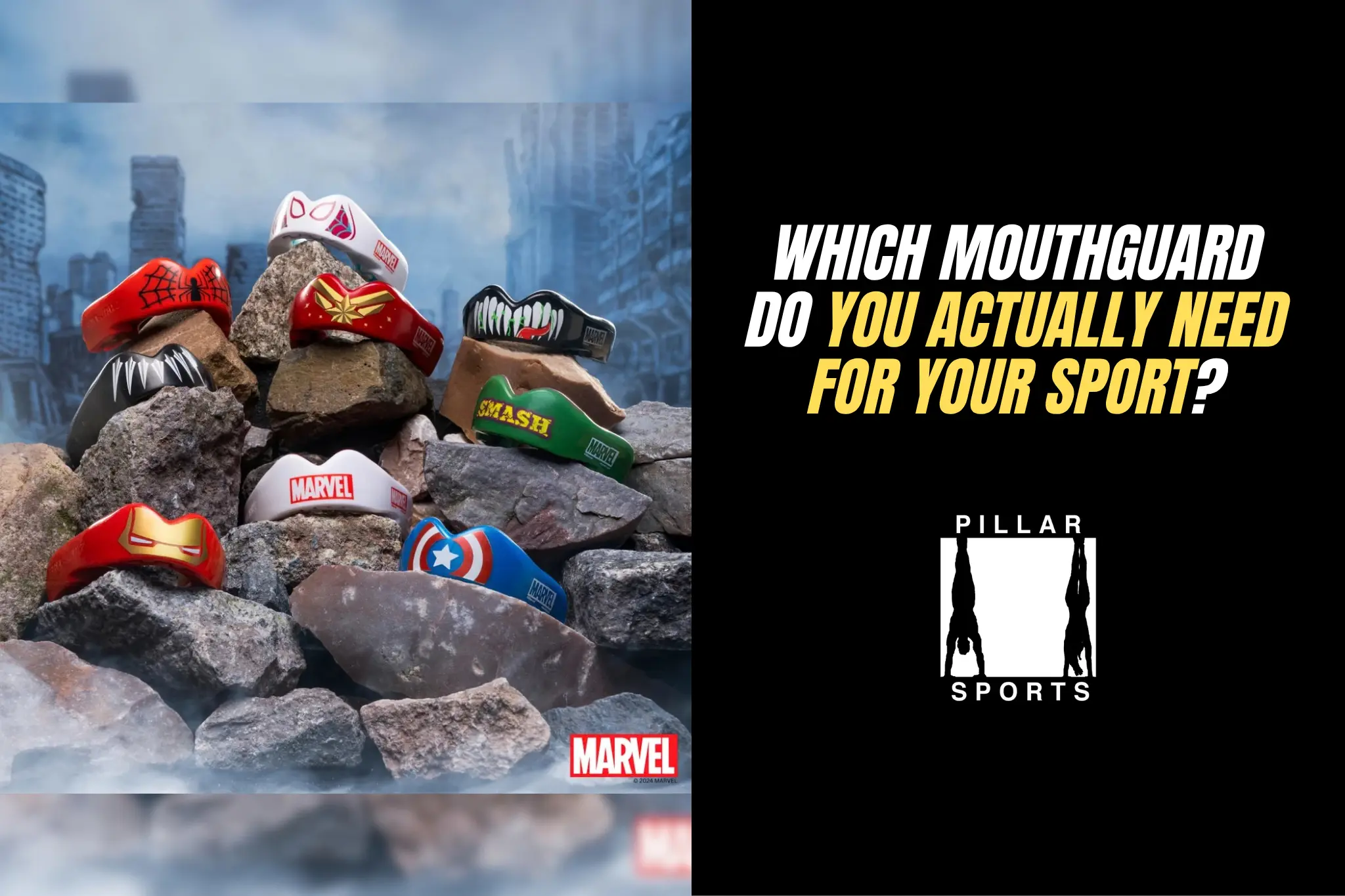
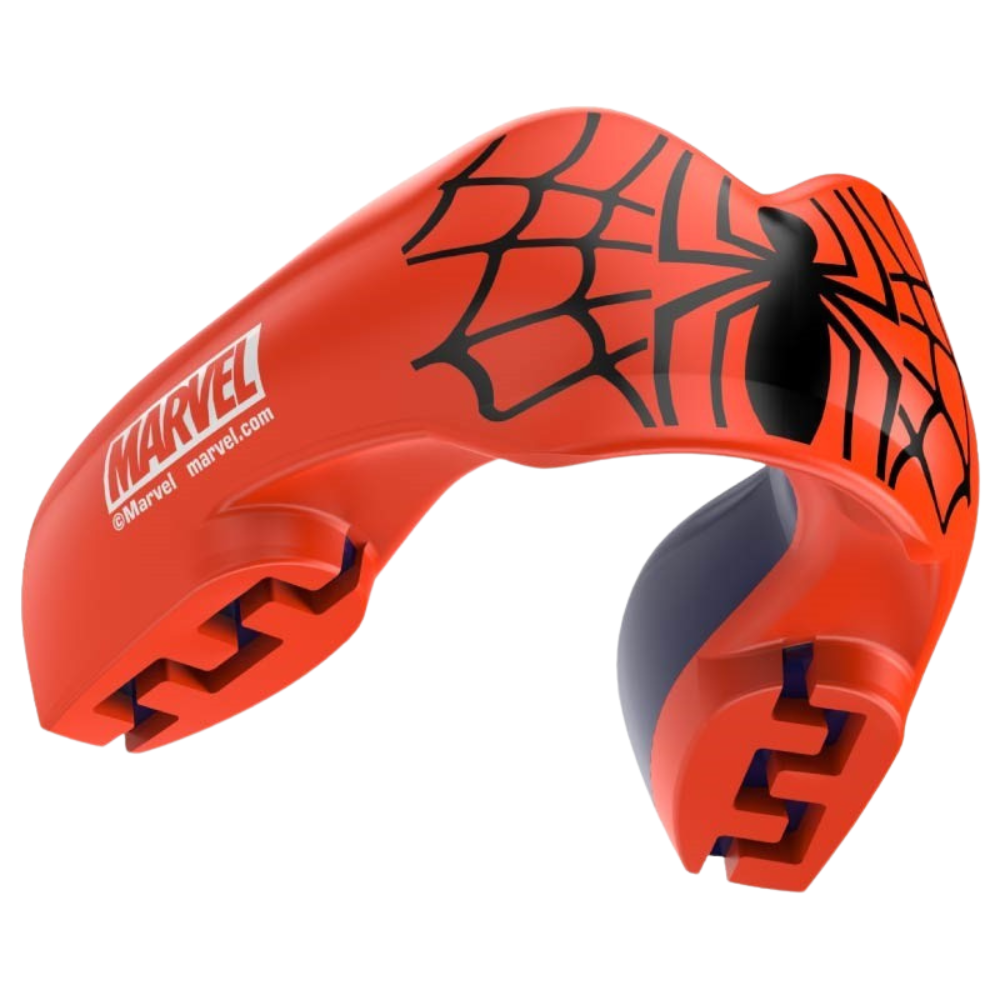
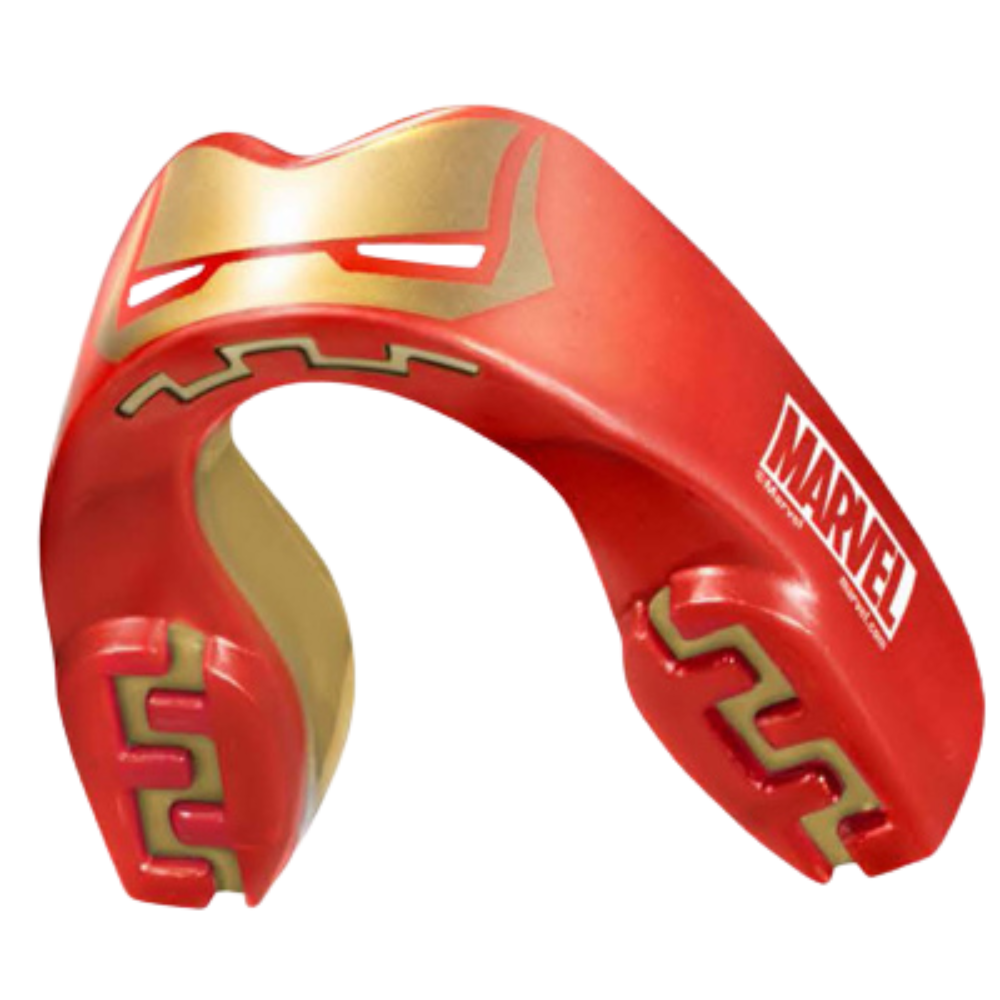
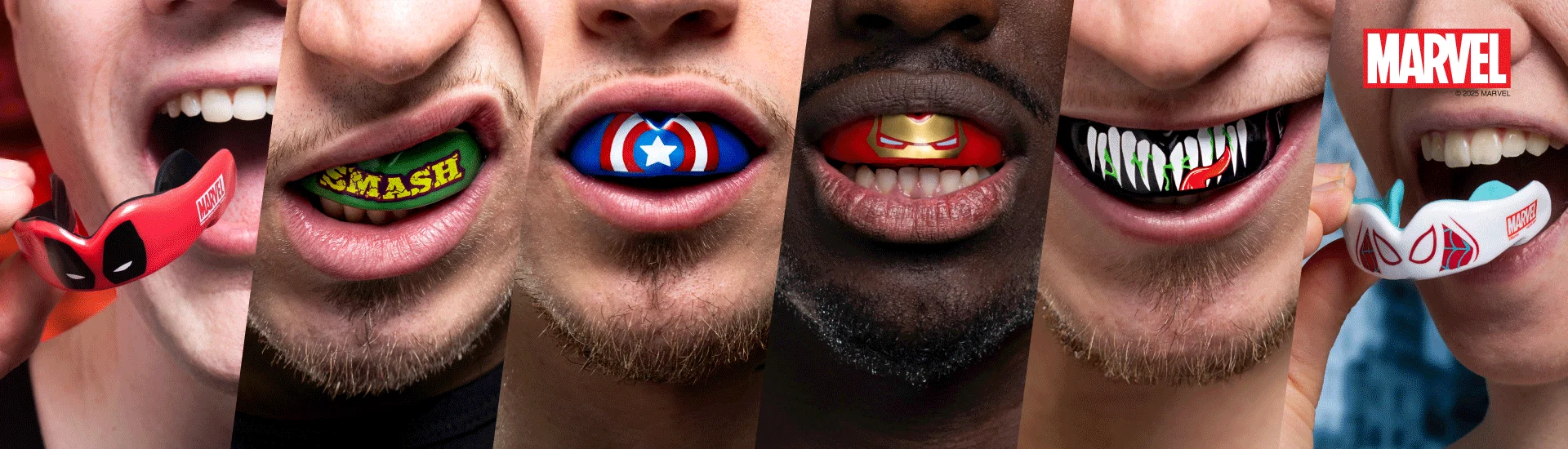
A double-layer guard like the SafeJawz Marvel range covers club and school rugby at both junior and senior sizes.
Boxing and Muay Thai
What changes. More material at the front, and retention that holds when you take a clean shot. A guard that moves on impact is worse than useless — it can cut the inside of your lip on the way.
What Hong Kong gyms expect. Most boxing and Muay Thai gyms in Hong Kong will not let you spar without one, and a lot of them will not let you into a partner drill either. It is the one piece of kit worth owning before your first class rather than borrowing.
On the clinch. Muay Thai adds knees and elbows from angles boxing does not produce, and a lot of head movement under pressure in the clinch. The same double-layer guard works; the fit just has to be good enough that it does not shift when someone is pulling your head down.
MMA and BJJ
Slim wins. Grappling is the sport where an over-thick guard causes problems. You spend time with weight on your face, breathing through a mouth that is already half-obstructed, and a bulky guard makes that meaningfully worse.
Retention over thickness. The failure mode in grappling is displacement, not fracture. A well-moulded double-layer guard that stays put beats a thicker one that gets pushed loose in a scramble.
Do you need one for BJJ? For no-gi and any training with strikes, yes. For gi rolling, most Hong Kong academies leave it optional — but accidental knees to the face are the single most common way people lose a tooth in training, and they happen in gi as often as no-gi.
Everything else
Hockey and lacrosse are the highest-risk sports on this list and warrant the most coverage you can tolerate. Basketball and football are lower-frequency but not low-risk — an elbow in a rebound contest does the same damage as a fist. Taekwondo requires a guard in most competition rules, and the junior scene in Hong Kong is large.
If you wear braces
Do not mould a standard guard over fixed braces. It will not seat correctly, and it can drag on the brackets. You need an ortho model — a softer channel designed to sit over the hardware without forcing the teeth.
If you are in braces and playing contact sport, speak to your orthodontist as well. They will have a view on your specific setup, and it is worth 30 seconds of the conversation at your next appointment.
What does not matter
Colour and design. No effect on protection whatsoever. Worth saying because it is most of what the marketing is about — including ours.
“Used by professionals”. Professional players wear custom guards made from dental impressions. That a brand sponsors a team tells you about their marketing budget, not about the guard you are buying off the shelf.
Gel and strap add-ons. Straps are required in some youth American football codes and nowhere in the sports above. A strap on a rugby guard is a snag hazard.
Getting the fit right
A boil-and-bite guard is only as good as the mould, and most people rush it. Thirty seconds in water just off the boil, seat it on the upper teeth, bite down, then suck in hard and press it against the teeth and gums with your tongue for a further 20 seconds. Cold water to set. If it is not right, do it again — the material re-moulds.
Full instructions are on the product page, and there is more on cost, brands and where to buy in Hong Kong in our guide to choosing a mouthguard here.
FAQs
At club and school level, almost all use a boil-and-bite double-layer guard. Professional squads use custom guards made from dental impressions, and increasingly instrumented ones that measure head impacts — that technology is not yet available at retail.
Yes. It is required kit for contact rugby under World Rugby guidance and by the Hong Kong Rugby Union, and every club and school programme here enforces it.
Yes. A good double-layer guard handles both. Sport-specific designs are a refinement, not a requirement, unless you are competing at a level where you have a custom guard made anyway.
Up to a point, then it works against you. Too thick and you cannot breathe or speak properly, which means you take it out — and a guard in your sock protects nothing. Double-layer construction beats raw thickness.
For no-gi and anything with strikes, yes. For gi rolling most academies leave it optional, but accidental knees are the commonest cause of dental injury in training, and they happen in both.