Last updated on: September 23, 2026
Every trainer has had this moment: an athlete peels off their tape after training and there’s a red, itchy patch where the adhesive sat. The instinct is to blame latex. Usually, that’s not actually what’s going on — and knowing the difference matters if you’re the one responsible for what’s in the kit bag for an entire squad.
Does Athletic Tape Contain Latex?
Some athletic tapes contain natural rubber latex, while others are manufactured without it. You cannot reliably determine whether a tape contains latex from its colour, flexibility or intended sport, so check the current product specifications before use.
A tape labelled “latex-free” is manufactured without natural rubber latex according to the supplier’s specification. However, latex-free tape can still contain other adhesives or materials that may irritate an individual’s skin.
If you need to avoid latex, check both the tape and every product used in the application, including underwrap, adhesive spray and cohesive bandage.
Latex-Free vs Hypoallergenic Athletic Tape
“Latex-free” and “hypoallergenic” do not mean the same thing.
Latex-free describes the absence of natural rubber latex in the product specification.
Hypoallergenic generally means that the product has been designed to reduce the likelihood of a skin reaction. It does not mean allergy-proof, and it does not guarantee that every person will tolerate the adhesive.
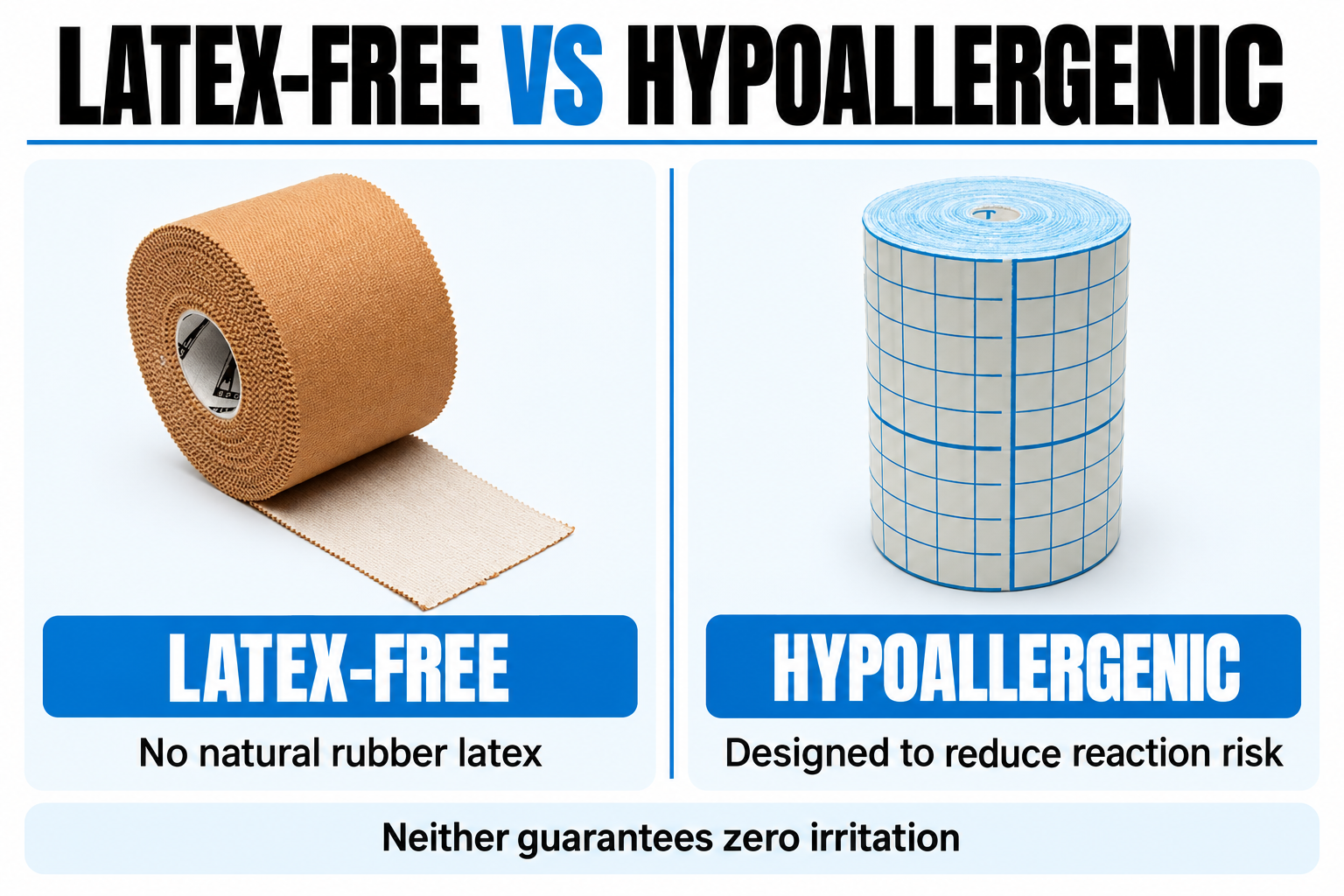
A product can be latex-free without being described as hypoallergenic. It may also be described as hypoallergenic while still requiring the user to check its full material and adhesive specifications.
Athletes with sensitive skin should consider the complete taping system: the tape, adhesive, underlayer, wear time, sweat exposure and removal method.
Should You Use Underwrap Beneath Athletic Tape?
Underwrap is placed between the skin and stronger sports tape. It may reduce direct adhesive contact and make removal more comfortable, but different underlayers behave differently.
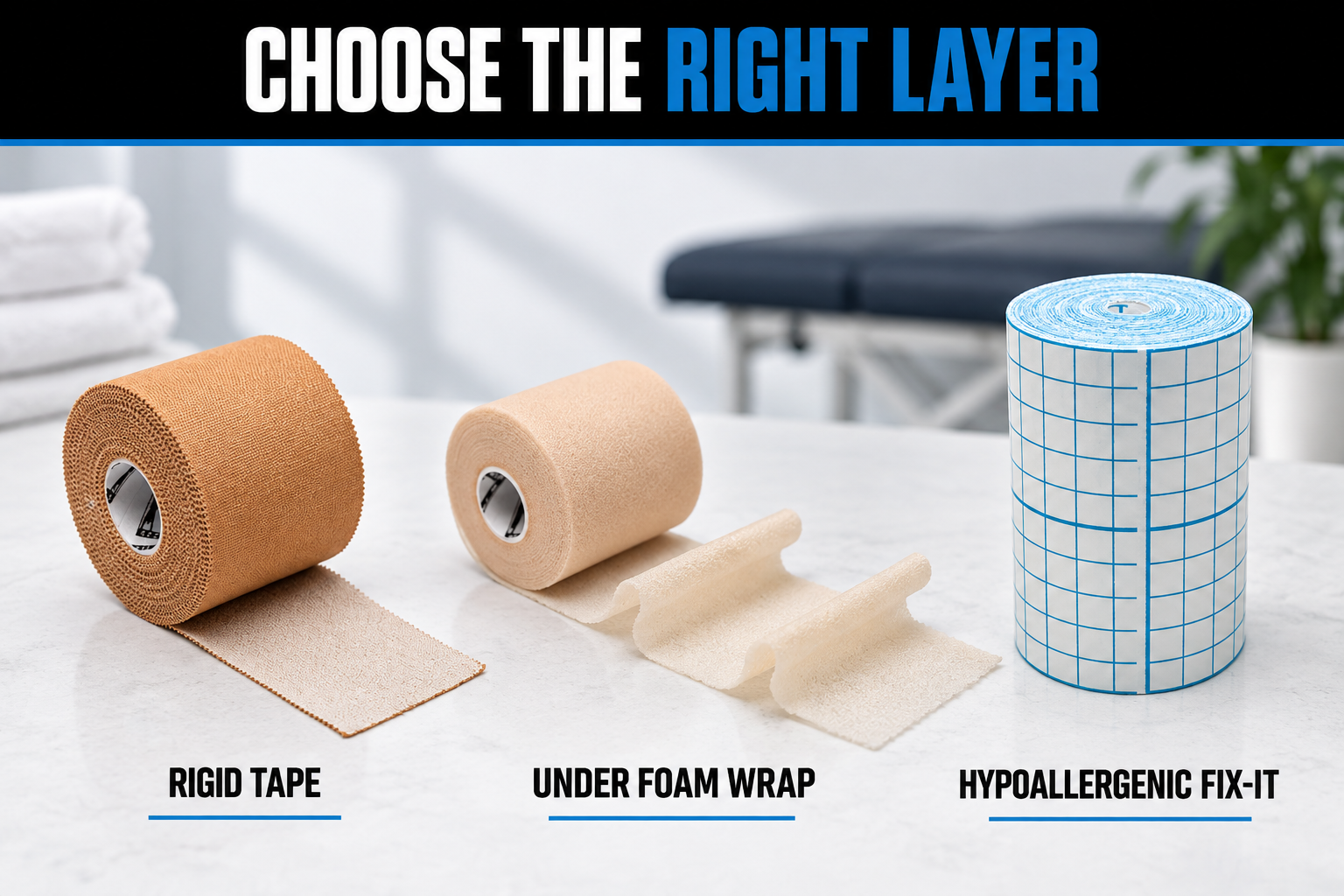
Foam Underwrap
Foam underwrap is a soft, non-adhesive layer applied before rigid athletic tape. It creates a physical barrier between the skin and the tape adhesive.
Because foam is not fixed directly to the skin, it may allow more movement beneath the rigid tape. This matters when the taping technique requires a firm mechanical connection.
Adhesive Underwrap
A non-woven adhesive underlayer attaches to the skin and creates a base for rigid tape. This can provide a more stable surface than loose foam while preventing the stronger rigid-tape adhesive from contacting the skin directly.
Adhesive underwrap still contains adhesive, so it cannot guarantee that irritation will not occur.
Foam or Adhesive Underwrap?
Choose according to the application, required support and individual skin response. Foam underwrap may suit applications where a soft, non-adhesive barrier is appropriate. An adhesive underlayer may be preferable when the rigid tape requires a more stable base.
If the taping application is intended to support an injury, ask a qualified practitioner whether the chosen underlayer will affect the required support.
What Actually Causes Skin Reactions to Sports Tape?
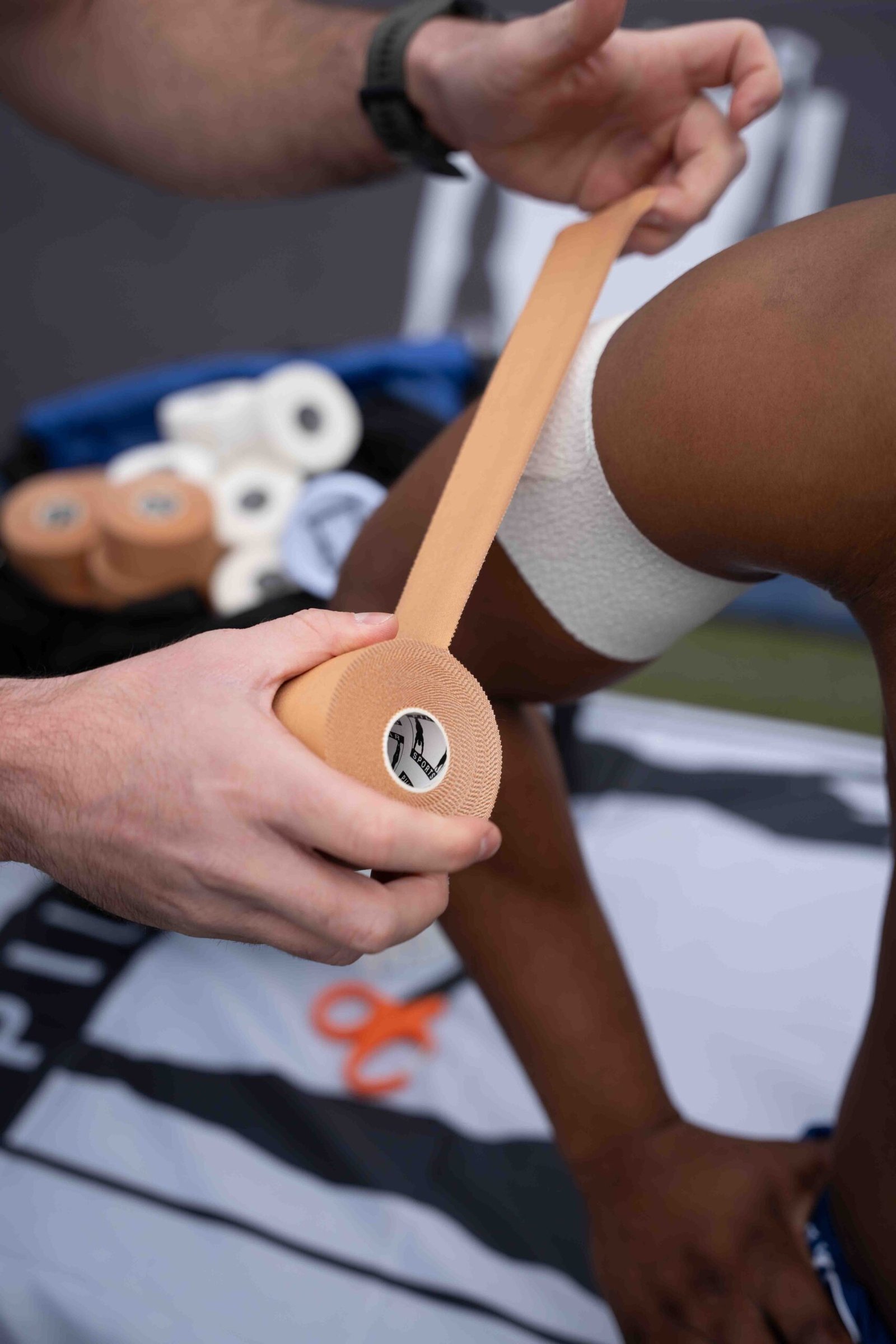
True allergic reactions to sports tape are rarer than most people assume. Latex allergy affects roughly 1% of the general population, and allergic reactions specifically to kinesiology-style tape are considered uncommon — most of what gets labelled an “allergic reaction” on the sideline is actually skin irritation from over-stretching the tape during application, friction, or moisture trapped under an occlusive strip.
That said, real sensitivities do exist, and latex isn’t the only culprit. A 2025 review of allergens found in athletic tape adhesives identified five main classes: acrylates, rubber additives (including rubber-based adhesives and accelerators), colophony (a rosin derivative), zinc oxide, and lanolin. Zinc oxide is worth flagging specifically — it’s the standard adhesive in rigid strapping tape, and it can irritate sensitive or already-damaged skin even in tapes marketed as latex-free or hypoallergenic.
The practical takeaway: latex-free doesn’t automatically mean skin-safe for everyone. It rules out one allergen, not all of them.
What to Look For in Sensitive-Skin Sports Tape
If you’re sourcing tape for someone with known sensitivity — or you’d rather not find out the hard way mid-season — a few things are worth checking before you buy:
Latex-free adhesive and backing, confirmed by the manufacturer rather than assumed.
A breathable, porous backing. Trapped moisture under an occlusive strip is one of the most common irritation triggers, independent of what the adhesive is made from.
Gentler adhesive removal. Skin damage from ripping off standard rigid tape is a separate problem from allergic reaction, and it compounds sensitivity over repeated use across a season.
A patch test before full application, especially the first time an athlete uses a new tape — apply a small strip to the forearm and check after a few hours, rather than finding out during a match.
Why This Matters More at the Team Level
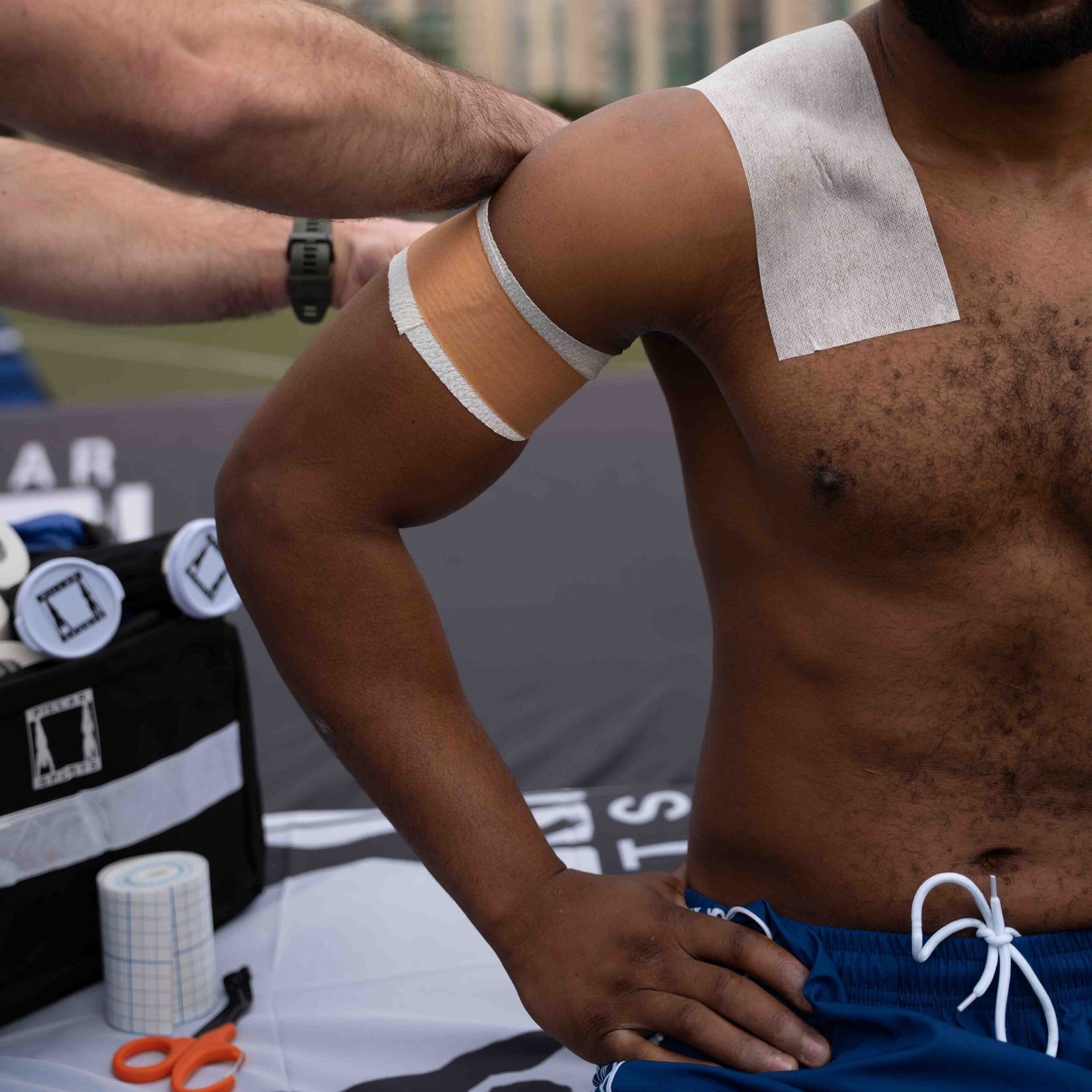
For an individual athlete, finding a tape that works for them is a one-time problem to solve. For a club, clinic, or squad, it’s different: one sensitive-skin athlete usually means the kit bag needs a dedicated hypoallergenic option sitting alongside the standard rigid tape — because it’s rarely just one player, and it’s rarely convenient timing when it comes up.
Trainers and physios managing tape for a full squad are better off standardising on a hypoallergenic option as part of the regular consumables order, rather than sending someone to a pharmacy mid-week because one athlete reacted to the standard stock. That’s a supply decision, not just a product decision.
Hypo Fix-it: Pillar Sports’ Sensitive-Skin Range
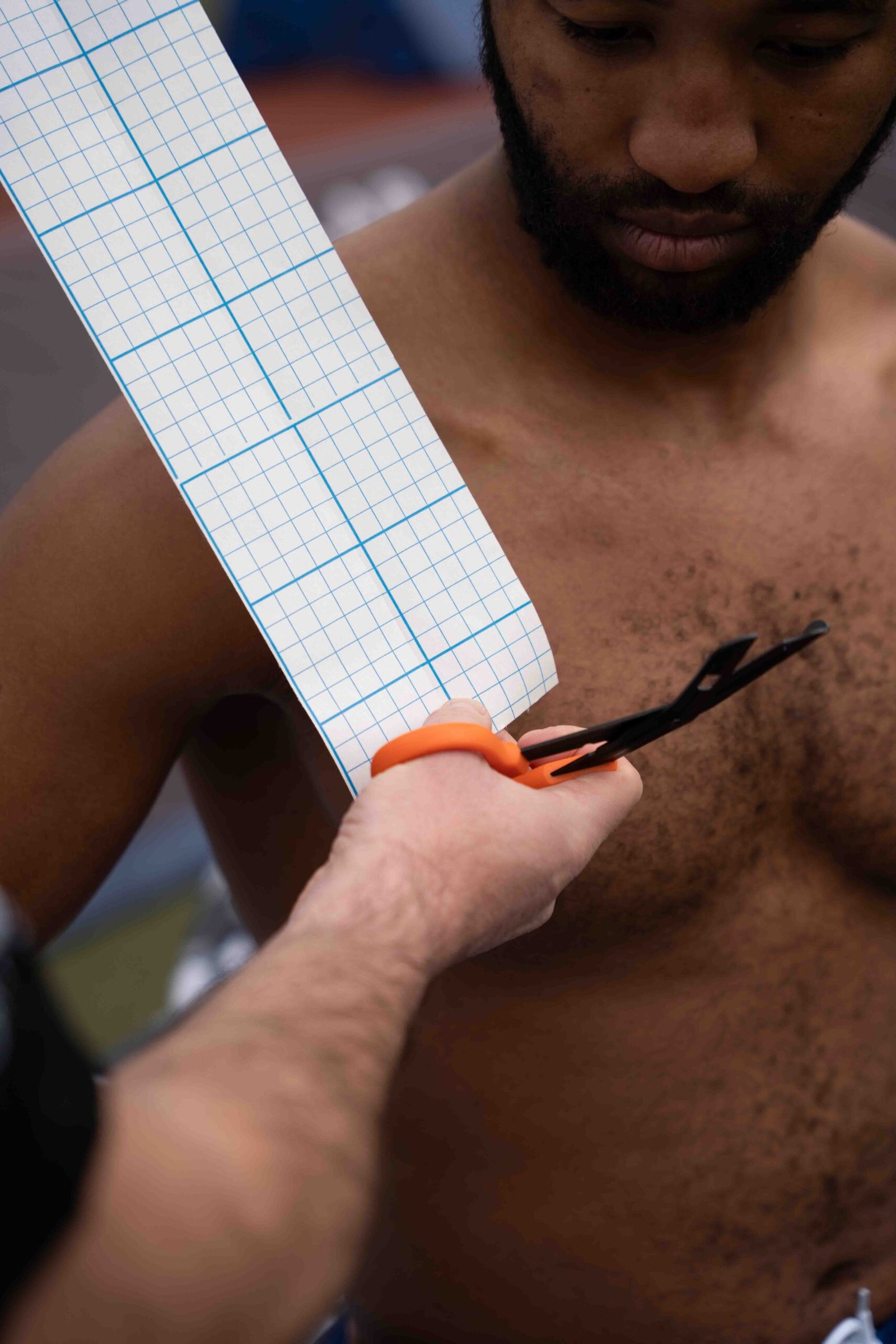
Pillar Sports’ Hypo Fix-it range is built for exactly this — a latex-free, sensitive-skin option that sits alongside our standard rigid strapping tape, cohesive bandage, and kinesiology tape, so clubs and clinics don’t need a separate supplier just to cover the athletes who need it.
If you’re ordering for a squad rather than yourself, it’s worth stocking Hypo Fix-it as part of your regular bulk tape order rather than a one-off purchase.
Should You Use Underwrap Beneath Athletic Tape?
Underwrap is placed between the skin and stronger sports tape. It may reduce direct adhesive contact and make removal more comfortable, but different underlayers behave differently.
Foam Underwrap
Foam underwrap is a soft, non-adhesive layer applied before rigid athletic tape. It creates a physical barrier between the skin and the tape adhesive.
Because foam is not fixed directly to the skin, it may allow more movement beneath the rigid tape. This matters when the taping technique requires a firm mechanical connection.
Adhesive Underwrap
A non-woven adhesive underlayer attaches to the skin and creates a base for rigid tape. This can provide a more stable surface than loose foam while preventing the stronger rigid-tape adhesive from contacting the skin directly.
Adhesive underwrap still contains adhesive, so it cannot guarantee that irritation will not occur.
Foam or Adhesive Underwrap?
Choose according to the application, required support and individual skin response. Foam underwrap may suit applications where a soft, non-adhesive barrier is appropriate. An adhesive underlayer may be preferable when the rigid tape requires a more stable base.
If the taping application is intended to support an injury, ask a qualified practitioner whether the chosen underlayer will affect the required support.
Why Can Athletic Tape Irritate the Skin?
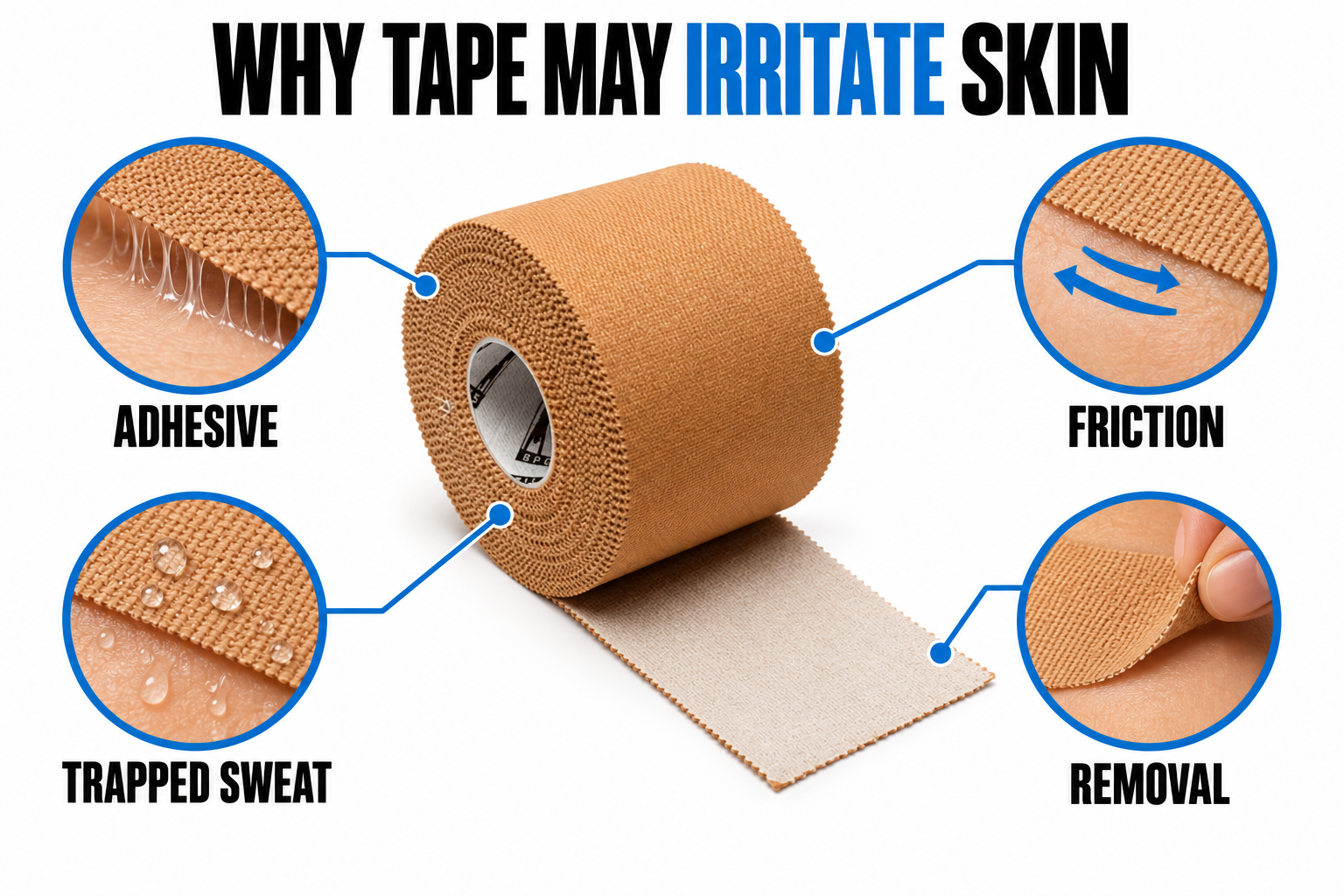
Skin irritation following taping does not always mean that the athlete has a latex allergy. Possible contributors include:
- Sensitivity to an adhesive or another material
- Friction between the tape and skin
- Excessive tape tension
- Moisture and sweat trapped beneath the tape
- Wearing the tape longer than recommended
- Applying tape over already irritated skin
- Removing the tape too quickly
- Repeated taping of the same area
Remove the tape if the skin becomes increasingly itchy, painful, blistered or unusually red. Persistent, recurrent or severe reactions should be assessed by a qualified healthcare professional.
Frequently Asked Questions
Some athletic tapes contain natural rubber latex, while others are manufactured without it. Check the current product specifications because you cannot determine whether a tape contains latex from its colour, stretch or intended use. Remember to check every product in the taping application, including underwrap, cohesive bandage and adhesive spray.
Not necessarily. “Latex-free” means the product is manufactured without natural rubber latex according to its specifications. “Hypoallergenic” generally means the product has been designed to reduce the likelihood of a reaction. Neither label guarantees that every person will tolerate the tape or adhesive.
Yes. A person may react to another ingredient in the adhesive or experience irritation from friction, trapped sweat, excessive tension, extended wear or repeated tape removal. Latex is only one possible cause of a skin reaction.
Yes. Some people may develop allergic contact dermatitis after exposure to an ingredient in a tape adhesive. Others may experience irritation that is not a true allergy. Persistent or recurring reactions should be assessed by a qualified healthcare professional, who may recommend formal patch testing to help identify the cause.
Temporary marks can result from pressure, friction or adhesive contact. However, increasing redness, itching, burning, blistering, swelling or pain may indicate irritation or a possible reaction. Remove the tape if symptoms develop and seek professional advice if they are persistent, recurrent or severe.
There is no single tape that is best for everyone. Check whether the product is latex-free, review its adhesive and backing material, follow its recommended wear time and consider whether the application can use an underlayer. A product described as hypoallergenic can still cause an individual reaction.
Underwrap can reduce direct contact between the skin and stronger sports-tape adhesive. Foam underwrap provides a soft, non-adhesive barrier, while a non-woven adhesive underlayer creates a more stable base for rigid tape. The right choice depends on the taping technique and level of support required.
Foam underwrap is non-adhesive and sits loosely between the skin and rigid tape. Fix-It is a non-woven adhesive underlayer that attaches to the skin and gives rigid tape a stable surface to adhere to. Fix-It still contains adhesive, so it cannot guarantee that a skin reaction will not occur.
Yes, rigid tape is frequently applied over foam underwrap. However, foam may allow more movement between the tape and skin, which can affect applications that require a firm mechanical connection. Ask a qualified practitioner if you are unsure whether foam underwrap is suitable for the intended technique.
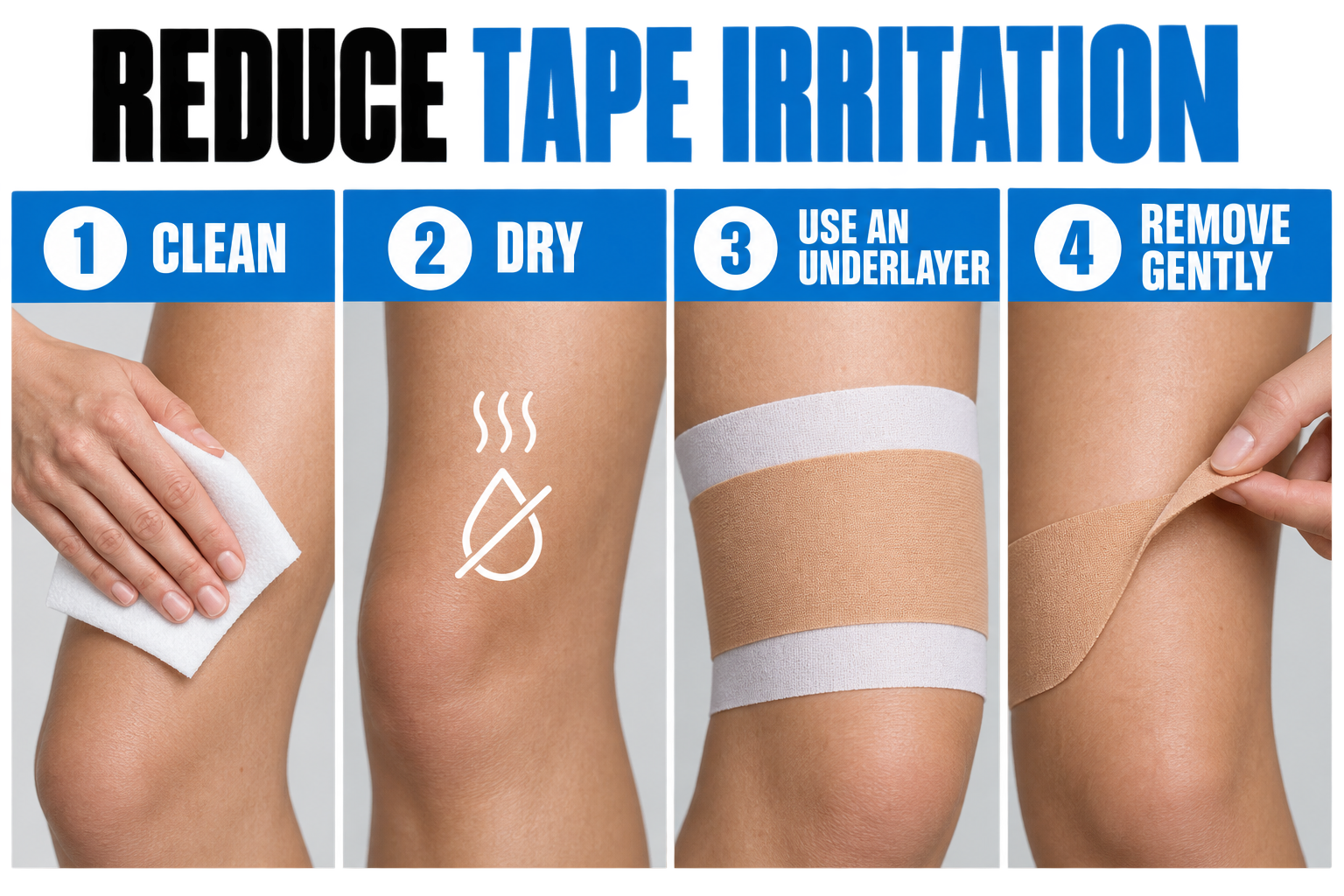
Follow the product’s removal instructions and remove the tape gradually while supporting the skin. Avoid ripping it off quickly. An appropriate adhesive remover may make removal easier when recommended for the product. Stop if removal is causing significant pain or damaging the skin.
Do not apply sports tape over broken, infected, sunburned or already irritated skin. Applying adhesive over a damaged area can worsen the irritation and make removal more difficult.
Remove the tape if you develop increasing itching, burning, pain, blistering or unusual redness. Avoid using the same product again until the possible cause has been considered. Speak with a pharmacist or qualified healthcare professional about appropriate care, particularly if symptoms are persistent, recurrent or severe.
Sources:
- Letter: Sticky Sensitivities: Investigating Allergens Found in Athletic Tape Adhesives — Weber, Karels, Arrington, Lee (2025)
- Latex Allergy — StatPearls, NCBI Bookshelf
- What Causes Skin Reactions to Kinesiology Tape? — SportTape
- Can People with Allergies Use Sports Tape — Coking Medical
- Rash Caused by Sticky Patch: Contact Dermatitis Due to Adhesive Tape Containing Zinc Oxide 20% — case report