Most clubs don’t get to choose their tape once — they choose it every season, usually under time pressure, and usually by reordering whatever was bought last time. That works until it doesn’t: a player with sensitive skin, a squad that’s outgrown its budget, or a physio who’s been quietly buying kinesiology tape out of pocket because the club stock doesn’t cover it.
Choosing tape properly means starting from what you’re actually treating, not from a product name.
Start With What You’re Treating, Not the Brand
Every type of sports tape solves a different problem. Picking the wrong one doesn’t just waste money — it means the tape doesn’t do what your athletes actually need.
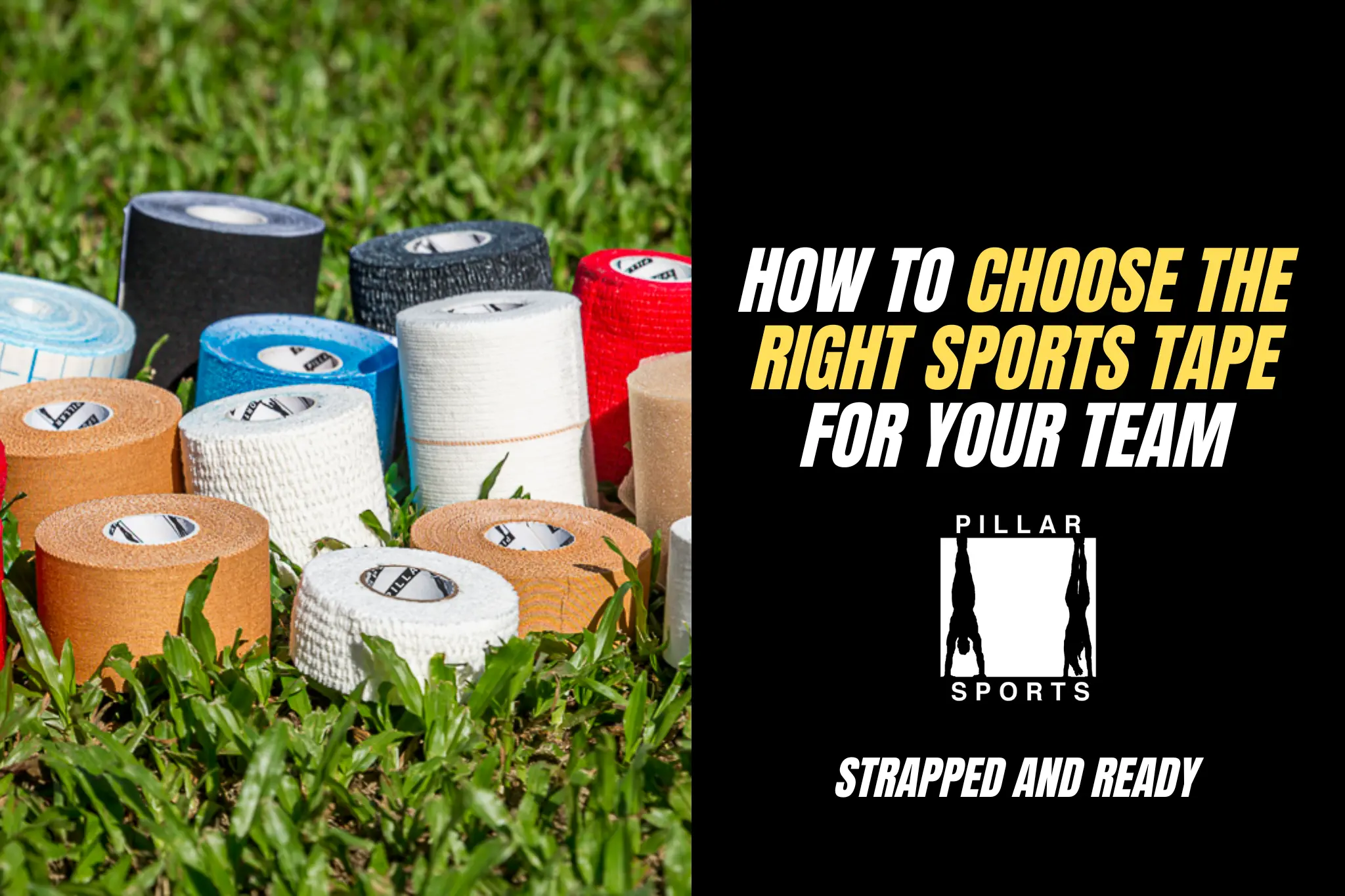
Joint stabilisation and injury prevention — before a known injury risk, or restricting movement during return-to-play — calls for rigid zinc oxide strapping tape. It’s firm, non-elastic, and holds a joint in a fixed position.
Muscle support without restricting movement, especially when an athlete needs support across several days of training and competition, calls for kinesiology tape. It stretches with the body rather than against it.
Compression and securing dressings — wrapping without adhesive residue — is what cohesive (elastic-adhesive) bandage is for.
Skin protection under rigid tape, particularly for high-volume matchday taping, is pre-wrap’s job — it speeds up application and makes removal far less painful.
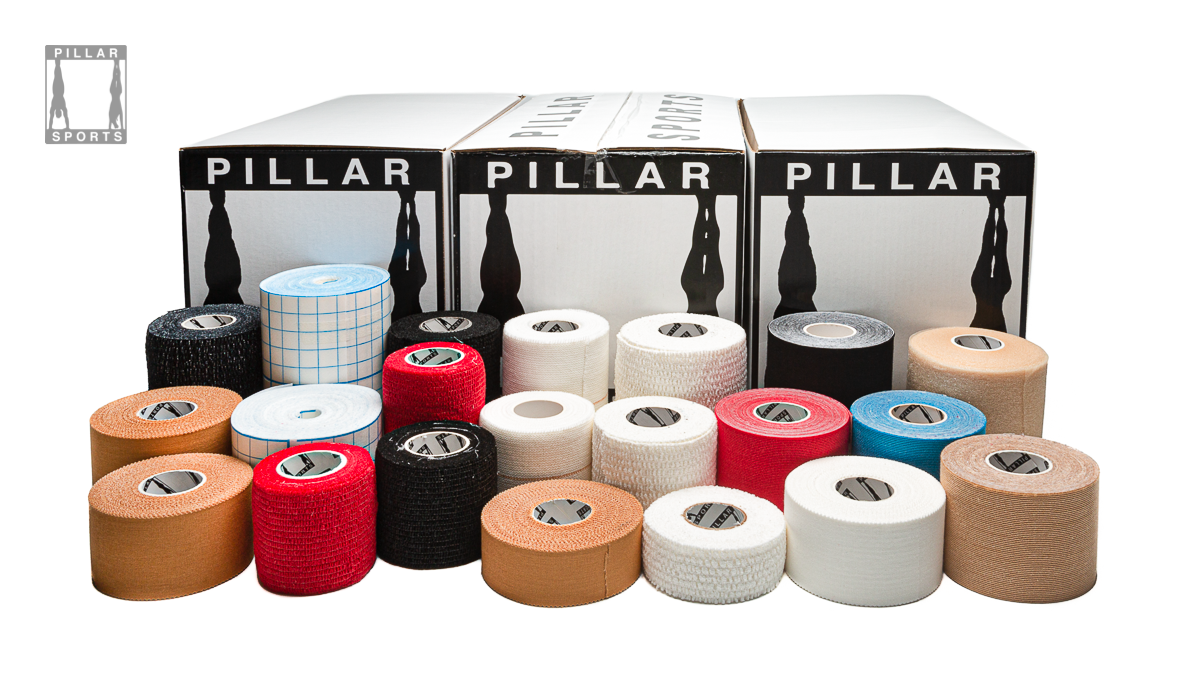
Sensitive or reactive skin needs a hypoallergenic, latex-free option in the kit bag as standard, not as an emergency substitution mid-season. See our sensitive-skin guide →
Wear Time Matters More Than People Think
One of the most common team-level mistakes is treating rigid tape and kinesiology tape as interchangeable. They’re not, and wear time is the clearest way to see why:
| Tape Type | Best For | Typical Wear Time | Common Sports |
| Rigid strapping tape | Joint stabilisation, injury prevention, return-to-play | Single session — under 24 hours, removed immediately after activity | Rugby, football, basketball, martial arts |
| Kinesiology tape | Muscle support without restricting movement | 3–5 days continuous wear | Running, CrossFit, multi sport and day tournaments |
| Cohesive bandage | Compression, securing dressings | Session to short-term | All contact sports, clinic use |
| Pre-wrap / underwrap | Skin protection under rigid tape | Single session, worn under rigid tape | High-volume matchday taping |
| Hypoallergenic tape | Sensitive or reactive skin, any of the above uses | Matches the base tape type it replaces | Any squad with a sensitive-skin athlete |
Rigid tape left on too long risks skin breakdown and restricted circulation — it’s built for the length of a match or session, not longer. Kinesiology tape is the opposite: it’s designed to stay on and keep working over several days.
If you’re training in Hong Kong or Singapore, heat and humidity change how all of this holds up in practice — worth a look at our guide to sports tape in HK/SG summer conditions → before you finalise what to stock.
Match Tape to Your Sport, Loosely
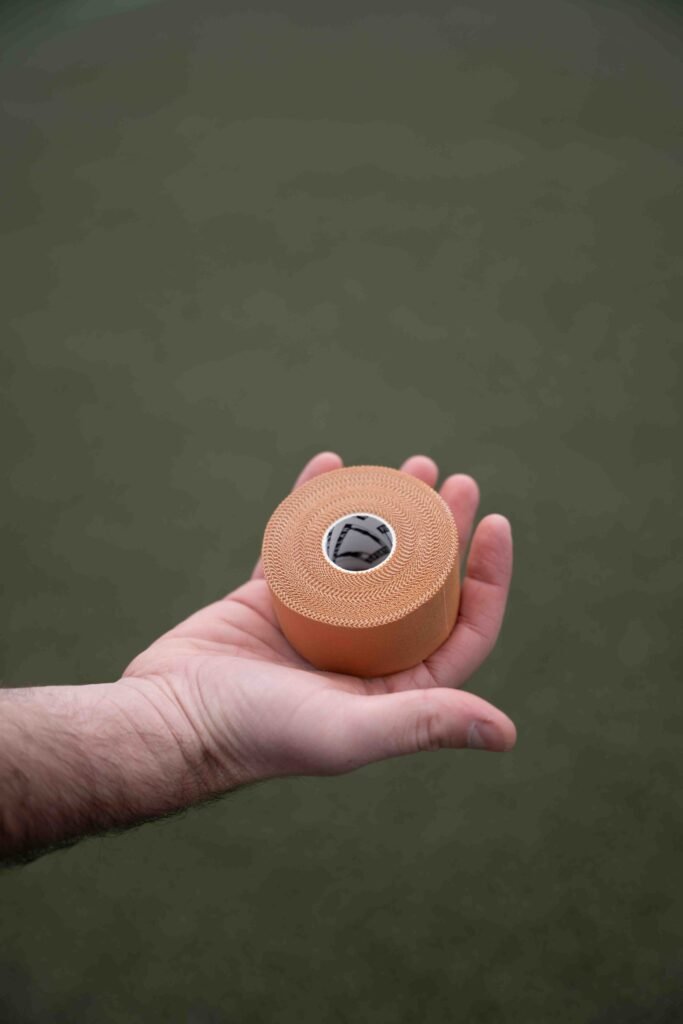
Contact and high-impact sports — rugby, football, basketball, martial arts — tend to lean more heavily on rigid strapping tape for joint protection. Sports with longer competition windows or heavy training loads often use more kinesiology tape for ongoing muscle support between sessions. Most squads end up needing both, plus pre-wrap and cohesive bandage as supporting stock — which is exactly why single-type orders tend to run out mid-season.
How Much Should Your Team Actually Stock?
This depends heavily on squad size and how often your athletes train and compete — enough that we’ve written a separate breakdown of real consumption numbers by club size. See how much tape a club actually goes through →
The short version: once you’re ordering across a full squad and multiple grades, per-roll retail pricing stops making sense, and that’s the point where sourcing through a bulk arrangement starts to matter more than the product choice itself.
One Supplier or Several?
Once you know which tape types your squad needs, the next decision is where they come from. Sourcing rigid tape, kinesiology tape, pre-wrap, and cohesive bandage from separate suppliers means separate invoices, separate delivery schedules, and separate relationships to manage — for consumables your team goes through every season, not just once.
Consolidating under one sports tape supplier simplifies that without narrowing your options, as long as that supplier actually carries the full range.

Frequently Asked Questions
Rarely. Most squads need at least rigid strapping tape and kinesiology tape for different purposes, plus pre-wrap and cohesive bandage as supporting stock. Relying on one type usually means physios improvising with the wrong product for a given injury.
If your squad is large enough to run a full season, it’s likely at least one athlete has sensitive skin or a reaction risk. It’s simpler to stock a hypoallergenic option as standard than to source one reactively.
No — they solve different problems. Rigid tape restricts movement to protect a joint; kinesiology tape supports muscle function without restricting movement. Most teams need both, not one instead of the other.
Once you’re buying across a full squad and multiple grades or age groups each season, per-roll retail pricing adds up fast, and a bulk or partner arrangement usually becomes the more cost-effective option. See how bulk ordering works →
Ready to move from figuring out what you need to actually stocking it? Book a Call
Sources: