Last updated on: September 23, 2026
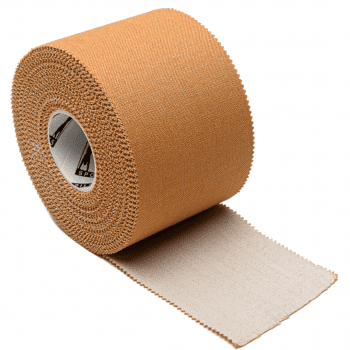
Strapping tape is a rigid, non-stretch sports tape used to support joints and limit unwanted movement during training or competition. It is commonly applied around ankles, wrists, thumbs, fingers, knees and shoulders—but the correct tape and technique depend on the body area and the athlete’s needs.
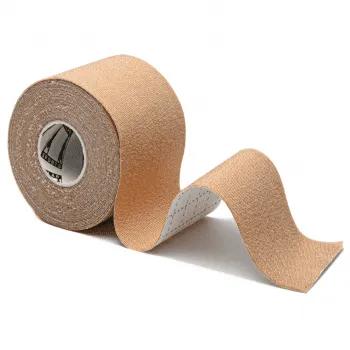
Also known as rigid sports tape, athletic tape or zinc oxide tape, strapping tape is different from kinesiology tape and elastic adhesive bandage. Rigid tape is designed to restrict movement; elastic tapes stretch and move with the body.
This guide explains what strapping tape is used for, how it differs from other sports tapes, which width to choose and what to consider before buying it.
What Is Strapping Tape Used For?
Strapping tape is commonly used to:
- Limit particular joint movements during sport
- Provide external support around an ankle, wrist, thumb or finger
- Support an area following guidance from a physiotherapist or qualified healthcare professional
- Help protect vulnerable areas during training or competition
- Secure certain sports-taping applications in place
Strapping tape does not diagnose or treat an injury, and it is not a substitute for rehabilitation. If you have significant pain, swelling, numbness, instability or a suspected injury, consult a qualified healthcare professional before taping and returning to sport.
When Might Strapping Tape Be Used?
Athletes and sports practitioners use rigid strapping tape in several situations.
Supporting a Vulnerable Joint
A physiotherapist or other qualified practitioner may recommend taping when an athlete needs external support around a joint. The technique should match the movement being limited and the demands of the sport.
Returning to Activity
Taping may form part of a return-to-sport plan, but it should not be used to hide pain or replace rehabilitation. The athlete should be assessed appropriately before returning to training or competition.
Sport-Specific Protection and Support
Rigid tape is commonly seen in rugby, football, basketball, netball, combat sports, weightlifting and other activities that place repeated demands on ankles, fingers, thumbs and wrists.
The important point is not simply whether to use tape—it is choosing the correct tape and applying it for a clearly defined purpose.
Strapping Tape vs Kinesiology Tape
Strapping tape and kinesiology tape are designed for different purposes.
| Feature | Rigid strapping tape | Kinesiology tape |
|---|---|---|
| Stretch | Little or no stretch | Highly elastic |
| Primary purpose | Limit particular joint movements | Move with the body while providing flexible support |
| Common applications | Ankles, wrists, thumbs and fingers | Muscles and areas where movement needs to be maintained |
| Typical wear | Usually one training session or match | Often worn longer, subject to the product instructions and skin response |
| Common sports | Rugby, football, basketball, netball and combat sports | Running, gym training and a wide range of field or court sports |
Choose rigid strapping tape when the application requires firm, movement-limiting support. Choose kinesiology tape when flexibility and continued movement are important. If you are managing an injury, ask a qualified practitioner which option and technique are suitable.
How to Use Strapping Tape: The Basics
Knowing how to use strapping tape correctly makes the difference between support that holds and support that fails mid-game. These are the foundations.
Start with Underwrap or Pre-Wrap
Decide Whether You Need an Underlayer
Rigid tape may be applied directly to prepared skin or over an appropriate underlayer, depending on the technique, required level of support and the athlete’s skin.
Foam underwrap can reduce direct adhesive contact and make removal more comfortable, but it may also allow more movement between the tape and skin. A non-woven adhesive underlayer may be another option for athletes who require skin protection beneath a rigid application.
If you have sensitive skin, known adhesive reactions or uncertainty about the correct application, speak with a qualified practitioner before taping.
Anchor Strips First
Anchor strips are the foundation of any strapping job. They go on before anything structural and they define the boundaries of your tape. For an ankle, this means two or three strips around the lower calf and across the arch of the foot, laid flat with moderate tension — not tight.
Apply Structural Strips with Purpose
The structural strips are what actually do the work. For ankle strapping, this typically involves stirrups (running down from the lower leg, under the heel, and back up), heel locks (crossing under the heel from each side), and figure-of-eights across the ankle. Each strip should overlap by about half its width.
Tension matters. Too loose and the tape provides no support. Too tight and you restrict blood flow, cause numbness, or both. The test: you should be able to slip two fingers under the tape at the calf. If you can’t, it’s too tight.
Close Out with Lock Strips
Finish the job by closing out with horizontal strips from the top anchor down to the foot anchor. These prevent the structural tape from shifting during play and lock everything in place.
For detailed step-by-step technique on ankle strapping, the How to Sports Tape an Ankle guide walks through the full process from underwrap to close-out.
Common Mistakes to Avoid
Even experienced athletes make these errors with strapping tape.
Strapping over swollen tissue. If an injury is actively swollen, strapping on top compresses the area and can increase pressure on already damaged tissue. RICER first (Rest, Ice, Compression, Elevation, Referral). Strap when the swelling is stable.
Applying tape directly to unshaved skin for a long haul. For single-use or short training sessions it’s fine. For a full weekend of sport or multi-day use, either shave the area or use generous underwrap. Removing tape from a hairy leg after two days is not a pleasant experience.
Wrapping too tight at the start. It’s tempting to go tight for maximum support. Resist it. Tape tightens further once you warm up and your muscles swell. Start with what feels like 70% of your maximum tension and let movement do the rest.
Reusing a poor tape job. Once strapping tape has been on through a match, its adhesive and structural integrity are compromised. For the next session, strip it off and start fresh.
For a full breakdown of what goes wrong with ankle taping specifically, 5 Common Ankle Taping Mistakes covers the errors physios see most often.
Joint-Specific Strapping: Where to Go Deeper
Ankles are the most commonly strapped joint in Australian sport, but strapping tape is used across the whole body. Each joint has its own technique.
Ankles. The most established application for rigid strapping tape. Proper ankle strapping for sports dramatically reduces inversion sprain risk during high-intensity movement. See the full ankle taping technique guide.
Knees. Knee strapping typically addresses patellar tracking or MCL/LCL instability. Unlike ankle strapping, knee strapping technique depends heavily on the specific injury, so it’s worth getting the first application done with a physio present. Sports Tape for Knee Support compares strapping against bracing for different knee conditions.

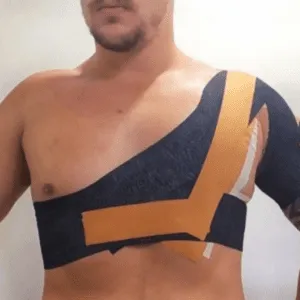
Shoulders. AC joint injuries, shoulder instability, and posterior shoulder pain all have established strapping protocols. Shoulder strapping is more complex than ankle strapping — the shoulder has a much wider range of motion to account for. Shoulder Strapping Guide covers the standard approaches by injury type.
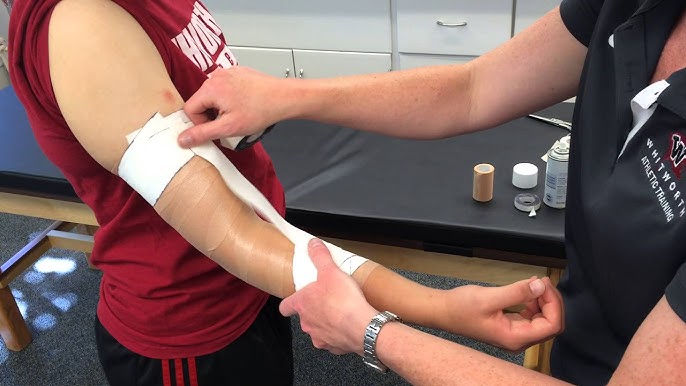
Elbows. Common in cricket (especially for bowlers) and rugby (for props and flankers). The goal is typically to support the medial or lateral collateral ligaments without blocking elbow flexion too aggressively. Elbow Strapping Guide covers technique and tape selection.
How to Choose the Right Strapping Tape
Consider the body area, tape width, adhesive, backing material and conditions in which the tape will be used.
Choose the Right Width
| Tape width | Common applications |
|---|---|
| 25 mm | Fingers, thumbs, wrists and smaller areas |
| 38 mm | Ankles, shoulders and general sports strapping |
| 50 mm | Larger joints and broader applications |
These are general guidelines rather than fixed rules. The correct width depends on the athlete, technique and level of support required.
Check the Backing and Adhesive
A rigid cotton backing provides non-stretch support and should tear cleanly when applied correctly. A zinc oxide adhesive is commonly used in athletic strapping tape. Check the individual product specifications for materials, skin suitability, sweat resistance and recommended wear time.
Consider the Playing Conditions
Training frequency, sweat, humidity, surface contact and the length of the session can affect which tape is appropriate. Athletes who need stronger performance in demanding or wet conditions may wish to compare standard and professional-grade rigid tape.
Standard or Professional-Grade Tape?
Standard rigid tape is suitable for many routine training and match-day applications. A professional-grade option may offer different adhesive, tensile-strength or water-resistance characteristics.
Review the specifications of each product rather than assuming that the word “professional” automatically makes one tape right for every athlete.
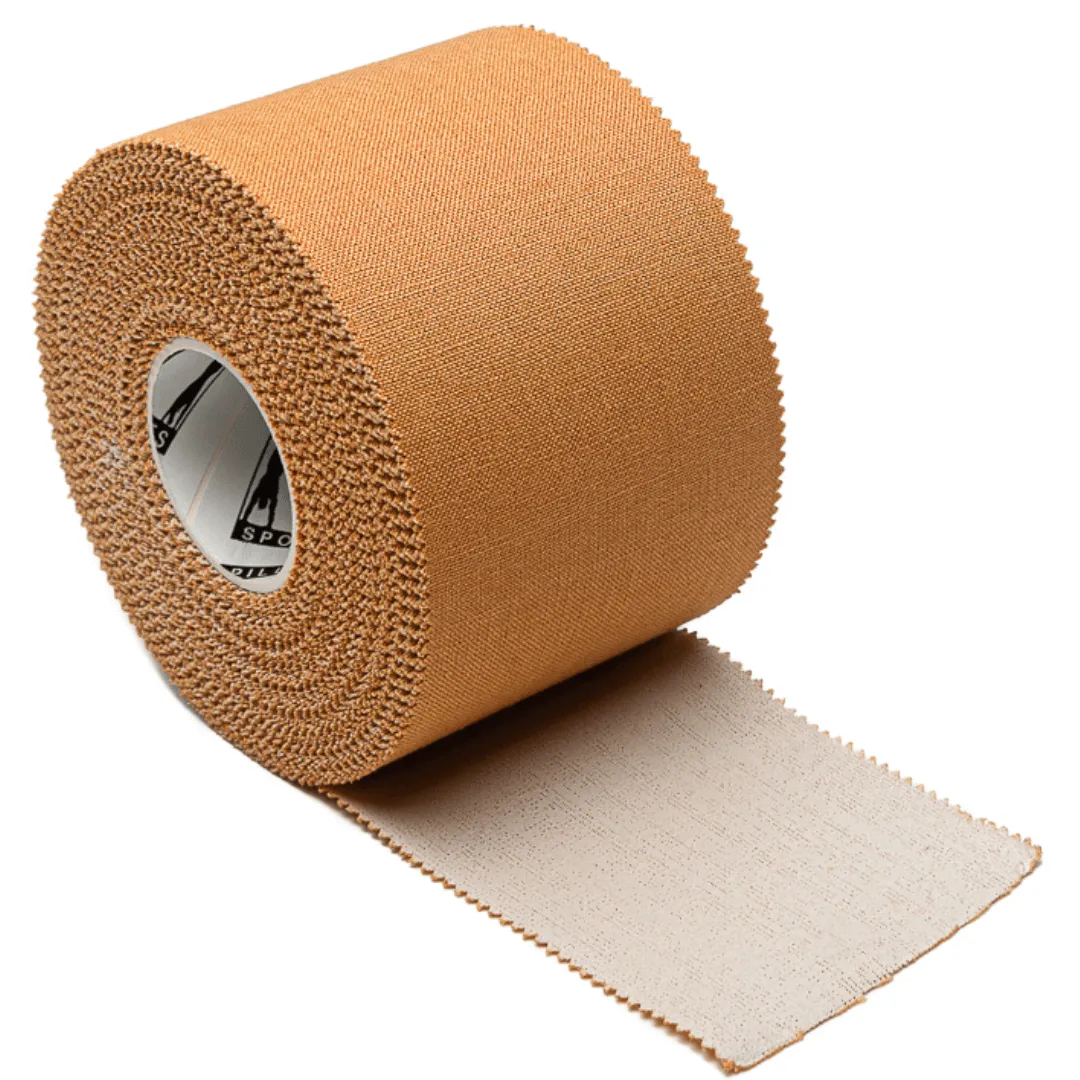
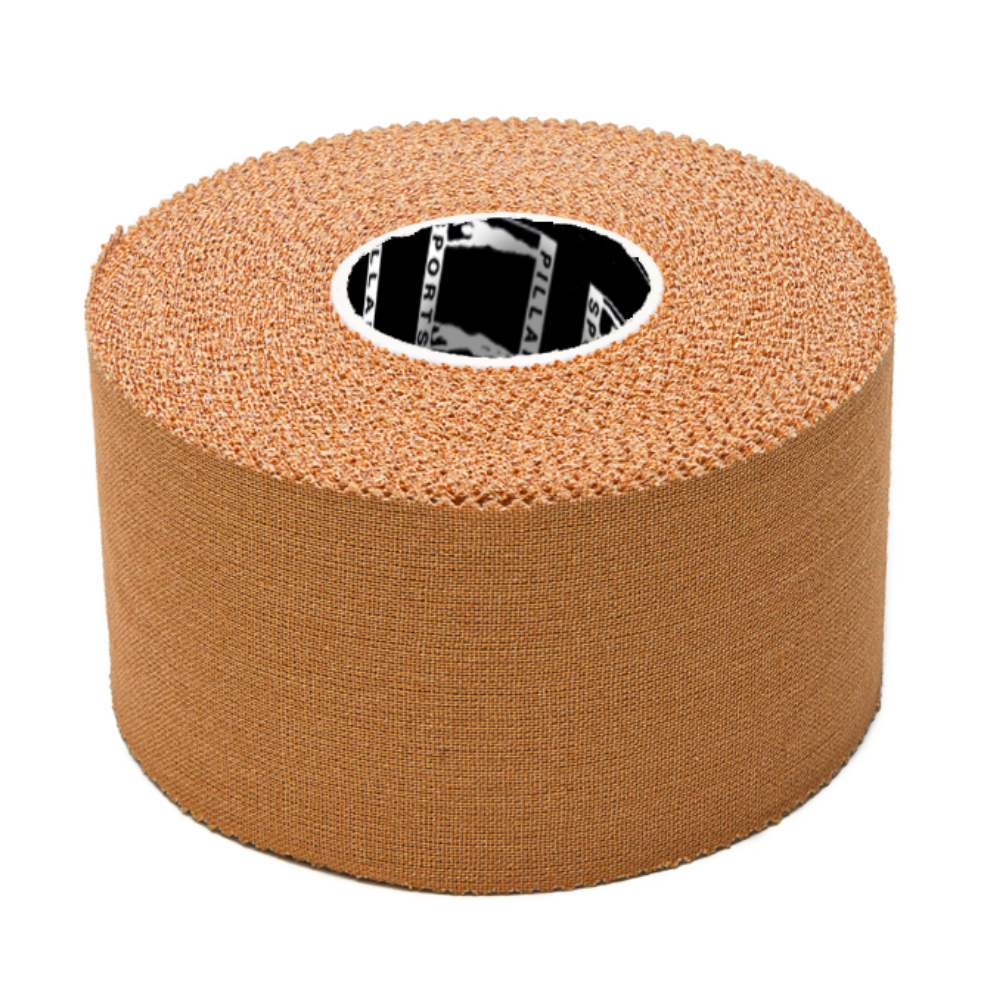
Pro vs. standard grade. There’s a meaningful quality difference between standard and professional-grade rigid tape in terms of tensile strength, adhesive durability, and how cleanly the tape tears. Pro Rigid vs. Standard Rigid Tape breaks down exactly where that difference shows up in practice.
Buying Strapping Tape?
Buying for yourself? Shop Pillar Sports Rigid Tape in 25 mm, 38 mm and 50 mm widths.
Buying for a club, school or clinic? Explore bulk sports tape supply for team orders, recurring requirements and a tailored quote.
How Much Strapping Tape Does a Team Need?
Tape usage varies considerably between teams. The amount required depends on:
- The number of athletes being taped
- Which body areas are commonly strapped
- The number of training sessions and matches
- Whether athletes use tape preventively or only when advised
- The width and length of each roll
- The taping techniques used by the medical or coaching team
A practical way to estimate demand is to record the number of rolls used during a typical training week and match day, then build in additional stock for tournaments, congested fixtures and unexpected demand.
If you manage purchasing for a club, school or clinic, explore Pillar Sports’ bulk tape supply to discuss product selection and recurring requirements.
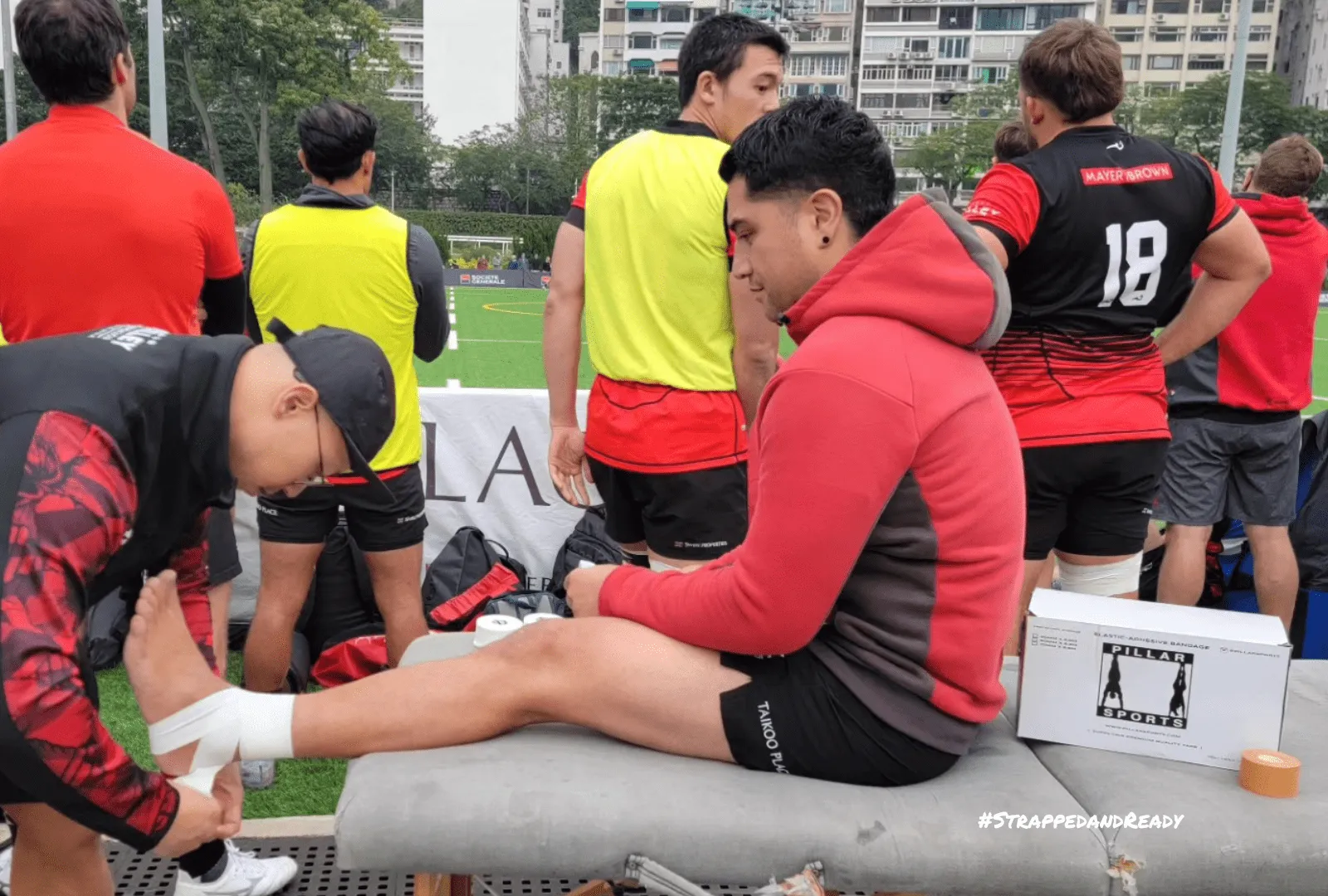
At club level, it adds up fast. A rugby union club with 60 players across three grades might use 40–60 rolls across a home match day. Netball associations with multiple courts running simultaneously have similar consumption. Buying in bulk as a club versus individually can reduce cost significantly per roll.
Pre-season is also worth planning for — strapping use is highest during the first six weeks of the season when athletes are building load tolerance and soft tissue injuries peak. Injury Prevention During Pre-Season has a practical framework for managing load and strapping demand across a squad.
Frequently Asked Questions
Yes — for ankle and finger strapping, most athletes learn to self-tape or tape each other with a bit of practice and a reliable technique guide. For more complex joints (shoulder, knee), getting the first few applications done by a physio means you’re replicating correct technique rather than ingraining a poor one.
A well-applied strapping job can last a full match and a few hours either side. For anything longer — overnight or multi-day applications — kinesiology tape is better suited. Rigid strapping tape left on too long can cause skin breakdown and excessive restriction once muscle fatigue sets in.
Effectively, yes. In the UK, sports strapping tape is commonly called zinc oxide tape or ZO tape. While in the US it’s often called athletic tape. Hence Australia, “strapping tape” is the standard term. They all refer to the same product: rigid, non-elastic sports tape with a zinc oxide adhesive.
Not recommended. Water degrades the adhesive and causes the tape to slip, removing whatever structural support it was providing. If you need to shower between strapping applications, remove the tape, shower, let the skin dry fully, and reapply.
Final Thoughts
Strapping tape is one of the simplest and most effective tools in an athlete’s kit bag — but the technique behind it matters. A well-applied strapping job protects joints, keeps athletes on the field through the season, and pays back every minute invested in learning to do it right.
If you’re a club trainer, a team physio, or an athlete who does their own prep, the guides linked throughout this post will take you through technique for every major joint. Start with the ankle — it’s the most common application and the best foundation for learning proper strapping mechanics.
Running a club, school sports programme, or team in Australia? Pillar Sports works with sports organisations across the Asia-Pacific region as gear partners. If your club runs through significant tape volume across the season and you’re looking for a consistent supply arrangement, reach out through our partnerships page to see if there’s a fit.
Choose Strapping Tape for the Job—not Just the Body Part
Rigid strapping tape is designed to limit movement and provide firm external support. The best tape depends on the application, required width, playing conditions and the athlete’s skin.
If you are learning to tape, begin with guidance for the specific body area rather than applying a generic wrapping technique. Explore our detailed ankle, shoulder, knee and elbow guides, and consult a qualified practitioner when taping an injury or planning a return to sport.
Need tape for your own training or competition? Shop Pillar Sports Tapes.
Supplying a club, school or clinic? Explore bulk sports tape options.
Sources
- Effectiveness of Taping for the Prevention of Ankle Ligament Sprains — British Journal of Sports Medicine / PMC
- Ankle Bracing and Taping to Decrease Inversion Range of Motion and Velocity — Journal of Athletic Training / PMC
- Injuries in Australian Rules Football: Rates, Patterns, and Mechanisms Across All Levels — Sports Health / PMC
- Prevention of Lateral Ankle Sprains — Journal of Athletic Training / PMC