Last updated on: September 11, 2026
Ordering custom rugby kits is one of the more consequential decisions a club committee makes each season. Get it right and you have a kit that holds up to match-day contact, fits your squad properly, and looks the part on the park. Get it wrong and you’re dealing with jerseys that shrink after three washes, collars that fall apart by round four, or a delivery that lands the week after your season opener.
This guide is written for club kit managers, captains, and committee members and beyond who are going through this process — whether it’s your first time ordering custom rugby teamwear or you’ve done it before and want to do it better.
If you’re still early in the process and want a broader overview of how custom kit ordering works across sports, start with our full custom sports uniforms guide. This post goes deep on what’s specific to rugby.
What Makes Rugby Kit Different from Other Team Sports
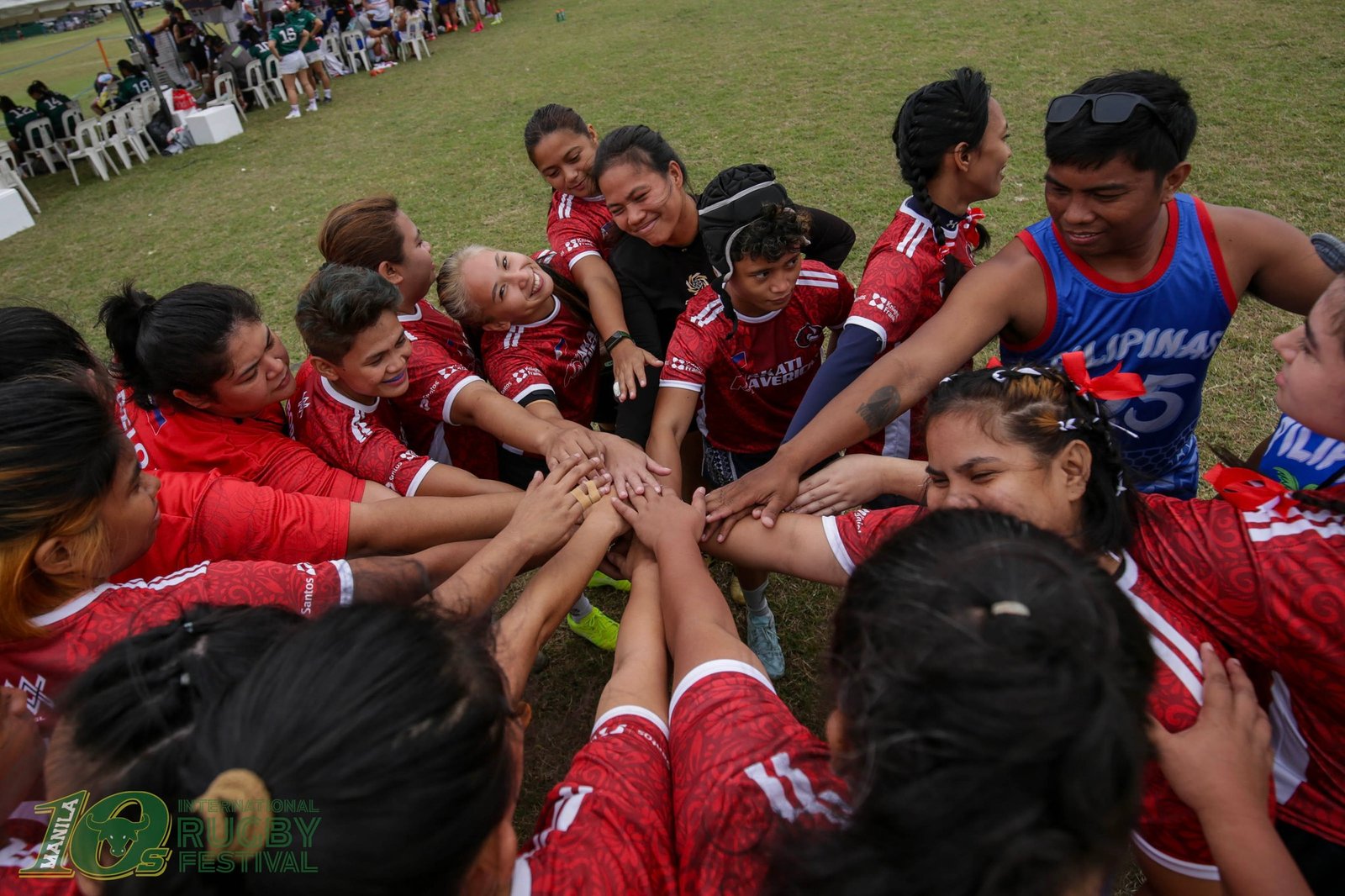
Rugby jerseys take more physical punishment than almost any other team sport. A typical match involves sustained close-contact play, repeated grabbing and pulling, and — for forwards in particular — extended periods in the scrum and ruck where jersey fabric is under constant stress.
That changes what you should be specifying when you order.
Read our custom team jersey blog a buyers guide for Club Managers
Most generic custom team apparel suppliers are set up for football, basketball, and netball — sports with lighter contact and simpler construction requirements. A rugby kit order placed with a supplier who hasn’t produced rugby jerseys before often results in fabric that tears early, seams that pull apart, or collars that lose their shape within a season.
Specify for rugby. Don’t accept a generic jersey with your badge on it.
What Should I Look for in a Rugby Kit Manufacturer?
A reliable rugby kit manufacturer should be able to demonstrate experience specifically with rugby jerseys — not just generic sportswear. Before you commit to anyone, get clear answers to the following:
Read Questions to ask your Kit Supplier
- Have they made rugby jerseys before? Ask to see examples. Photos of finished kits with visible collar construction, sleeve detailing, and any grip panels are a reasonable ask.
- Can they produce position-specific construction? If they don’t know what you mean by collar reinforcement or grip panels, they’re not a rugby specialist.
- What is their proof and revision process? You should receive a digital proof before production begins, with at least two rounds of revisions included before additional charges apply.
What is their documented policy if the finished product doesn’t match the approved proof? Get this in writing before you pay any deposit.

What are their realistic lead times?
- Design proofing typically takes 5–7 business days.
- Production runs 15–28 business days depending on the supplier and the product.
- Shipping adds another 1–3 weeks depending on method.
- Total: Total: 6–10 weeks from brief to delivery is realistic for a standard order. Less than that is possible, but only with compressed timelines and added cost.
💡 Pro Tip: Always ask to see a physical sample garment — or at minimum a fabric swatch — before approving production on a large order. Colour on screen and colour on fabric are not the same thing, especially with sublimation printing.
Get your team match-ready. View our custom rugby kit options and request a quote.
How to Brief a Rugby Kit Designer or Kit Builder
Whether you’re working directly with a manufacturer or using an online rugby kit builder tool, the brief you submit determines the quality of the outcome. Incomplete briefs produce vague quotes and rounds of avoidable back-and-forth.
Your rugby kit brief should include:
1. Quantity and size run. Total jerseys, broken down by size. Collect actual squad measurements — chest circumference and body length — rather than estimating. Most manufacturers require this before confirming a quote.
2. Design brief. Your club colours in Pantone or hex codes, not a screenshot. Your badge and any sponsor logos in vector format (AI file). A rough visual reference of the design direction — even a hand sketch is useful. The more specific your direction, the fewer revision rounds you’ll need.
3. Position-specific requirements. Which positions need grip panels or reinforced collars? Do you want a different cut for backs vs. forwards, or a uniform cut across the squad?
4. Customisation detail. Player names, squad numbers, position labels if used, sleeve detailing. Confirm the exact placement for each element.
5. Fabric preference. Performance sublimation polyester is the standard. If you want a polyester-elastane blend for added stretch, flag this early — not all manufacturers offer it at club-order quantities.
6. Deadline. A specific date, not “as soon as possible.” Work backwards from your first match or tournament, factoring in the production timeline above.
Don’t settle for generic sportswear. Explore Pillar Sports’ Custom Rugby Kits and get gear built for the contact zone.
Rugby 7s Kits: Tournament Timelines and Design Considerations

Tournament rugby — particularly rugby 7s — has different demands on the kit ordering process.
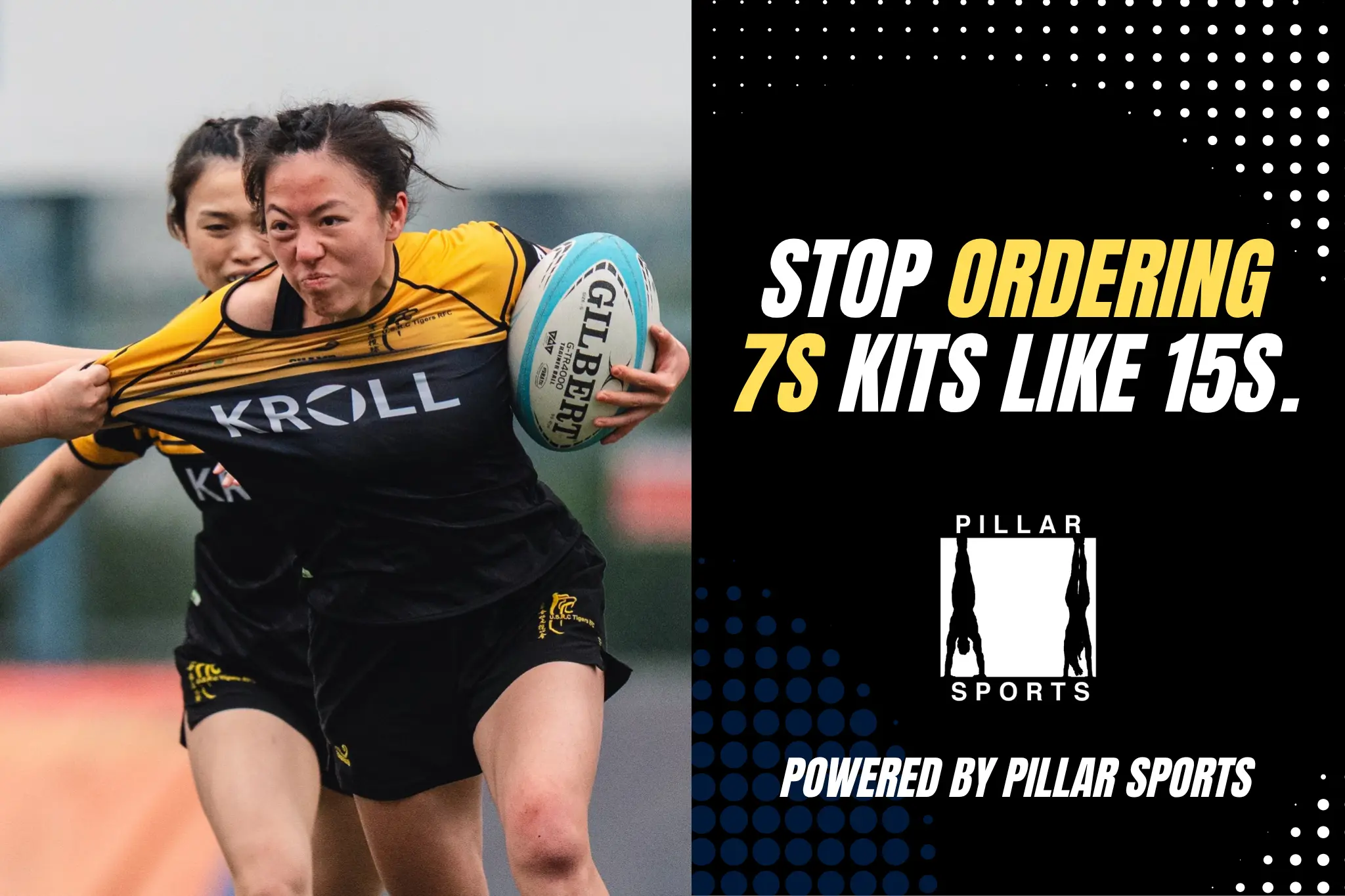
The season window for most rugby 7s tournaments is fixed and often announced at short notice. If you’re ordering a custom rugby 7s kit, 10–12 weeks lead time is the standard recommendation. Cutting it to 6 weeks is possible, but leaves no room for revision delays or shipping complications.
Minimum Order Quantities for Custom Rugby Teamwear
Most custom rugby teamwear suppliers work with minimum order quantities (MOQs). For sublimation kits, the floor is typically 10 units per design — workable for most senior club squads.
For cut-and-sew construction — where pattern pieces are custom-cut from raw fabric for your exact size run — MOQs are higher, typically 30+ units, because the setup cost per design is greater. This level of construction is more common for professional squads and well-funded amateur clubs than for community teams.
At Pillar Sports, our minimum order for custom rugby kits is 10 pieces.
See how we work with rugby clubs
The Design Proofing Process
Once you submit your brief, your supplier or rugby kit designer should return a digital proof — a visual mockup of the jersey in your colours with your design applied.
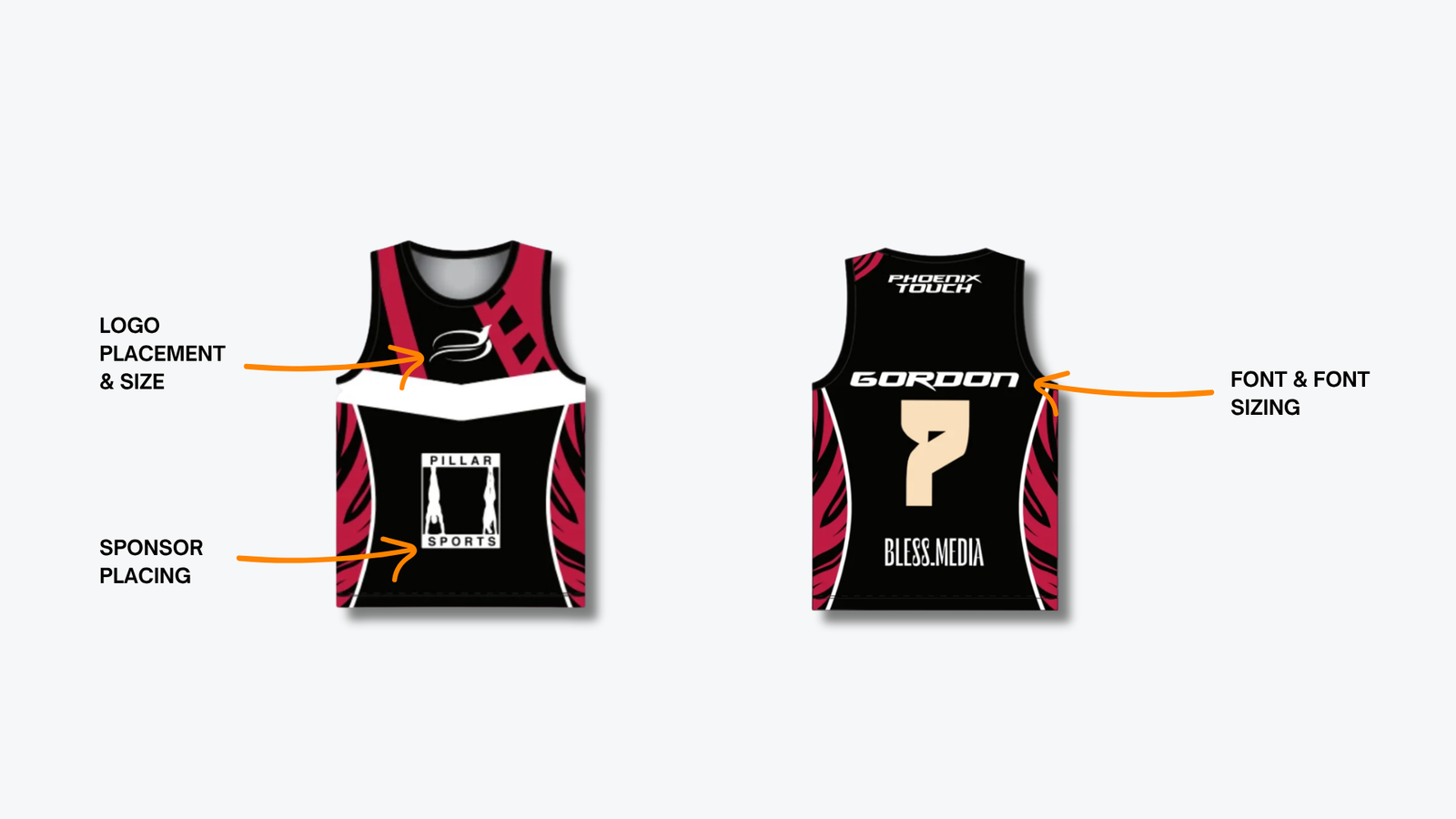
Review it carefully. Check:
- Colour accuracy against your Pantone or hex codes
- Badge and logo placement and sizing
- Player name and number font, size, and placement
- Sponsor logo sizing and position
- Grip panel placement (if specified)
- Overall proportions of the design across front, back, and sleeves
Do not approve the proof in a hurry. Get sign-off from your club president, kit sponsor, or any stakeholder whose branding appears on the jersey.
A mistake caught at proof stage costs nothing to fix. A mistake caught after production is expensive — and not always recoverable.
Know how many revision rounds are included before additional charges apply. Most suppliers allow two.
Frequently Asked Question
At club quantities of 15–30 jerseys, sublimation rugby jerseys typically range from USD $2–$45 per piece depending on construction spec and design complexity. Forwards-specific construction with grip panels and reinforced collars sits toward the higher end of that range. Cut-and-sew construction runs USD $40–$70+ per piece. Get itemised quotes before committing.
Most sublimation suppliers accept orders from 10 units. If your squad is smaller, it’s worth asking — some manufacturers will go lower, though per-unit cost increases significantly. Pooling an order with another club or division is worth considering.
Yes, though not all manufacturers offer this by default. Raise it in your brief. Some suppliers will offer a modified cut within the same order at no additional charge; others treat it as a separate SKU with its own MOQ.
Yes. Suppliers need vector files — Adobe Illustrator (.AI) or EPS — for clean logo reproduction. A JPEG or PNG will degrade during production. If your club only has low-resolution files, a graphic designer can recreate them in vector format before you start the ordering process.
A reputable manufacturer will reprint at their cost if the finished product doesn’t match the approved proof within agreed tolerances. Get this commitment in writing before you pay the deposit.
10–12 weeks before your first match is the safe answer. 8 weeks is workable if your brief and design files are ready from day one. Less than 6 weeks is high-risk unless you’re paying for rush production and air freight.
Final Thoughts
Custom rugby kits done properly require more specification than a standard team kit order — but the difference in durability and fit over a season is significant. The clubs that get it right start early, brief thoroughly, specify for the sport rather than accepting a generic jersey, and choose suppliers who can demonstrate rugby-specific experience.
For rugby clubs worldwide, Pillar Sports works directly on custom kit programmes — from initial brief through to delivery. If you’re planning kit for the upcoming season, we’re worth talking to before you commit to a supplier.
Avoid the late deliveries and shrinking jerseys. Trust Pillar Sports for your club’s custom rugby kits.
Related Readings:
- How to Order Custom Sports Uniforms for Your Club or School Team
- Rugby 7s Kits — What Tournament Teams Need to Know
Sources: