Last updated on: September 11, 2026
Most kit ordering problems start before production begins. A club commits to a supplier based on price, skips the right questions, and finds out too late that the timeline was unrealistic, the fabric wasn’t what they expected, or there’s no clear resolution process when things go wrong.
Sourcing custom sports apparel is a procurement decision. Treat it like one. The questions you ask before signing anything determine how smoothly the rest of the process goes — and whether you end up with a supplier relationship worth repeating.
This post is a practical guide for club administrators and kit managers evaluating club kit suppliers for the first time, or replacing a supplier that hasn’t delivered. If you want a broader overview of the ordering process from brief to delivery, start with our guide to ordering custom sports uniforms.
Why Supplier Evaluation Matters More Than Price
The custom sports and apparel market has a wide range of manufacturers. Most of them look similar at the quote stage — polished websites, strong sample photography, competitive pricing. The differences show up during production, not before it.
A supplier who quotes low but can’t hold a timeline will cost your club more than a slightly pricier supplier who delivers on time and communicates clearly. A supplier who doesn’t understand rugby construction requirements will produce a jersey that looks right on screen but fails on the pitch by game three. For rugby-specific construction standards, see our custom rugby kits guide.
Price is one input. It shouldn’t be the only one.
The Checklist: Questions to Ask Every Club Kit Supplier
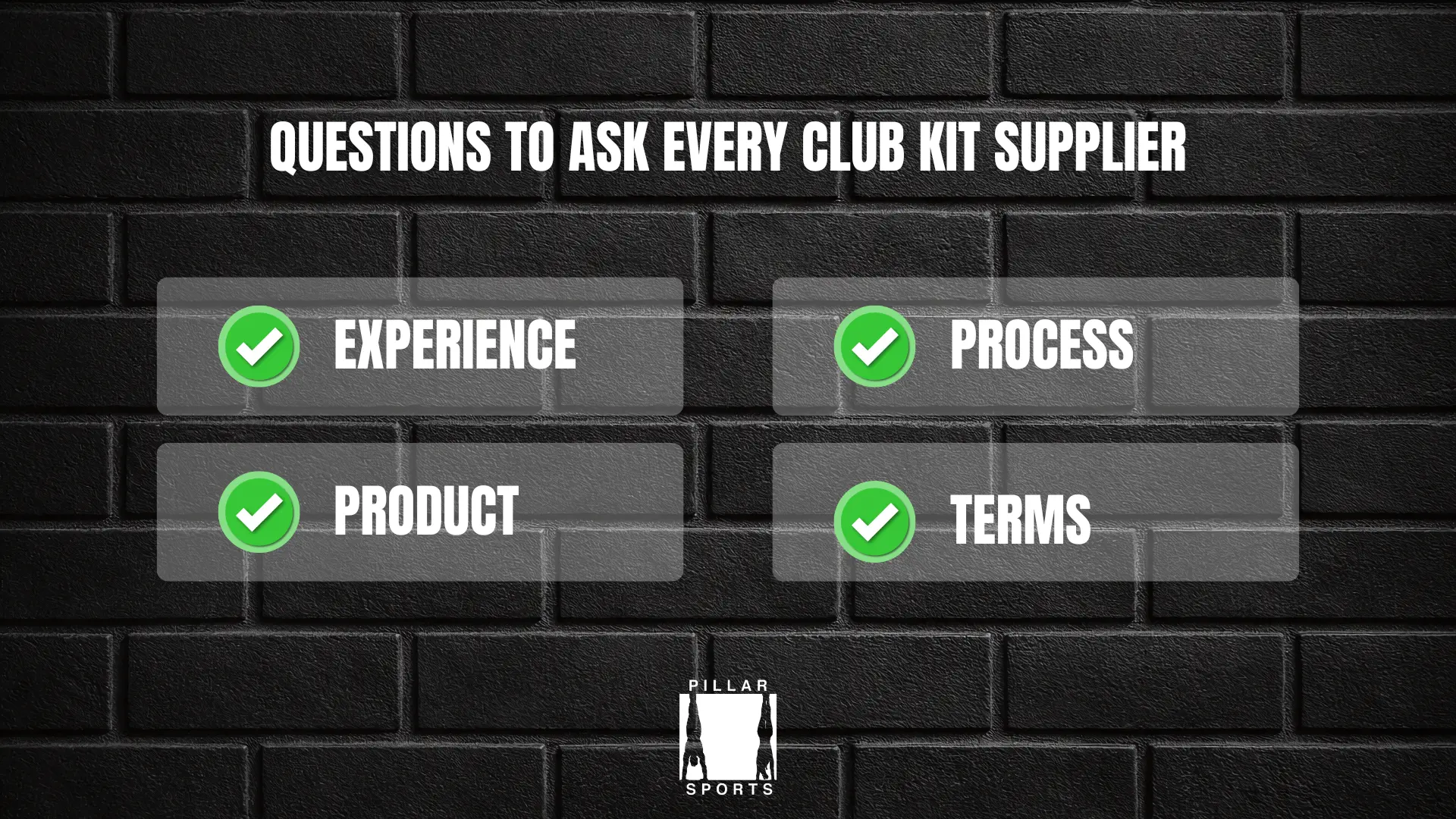
Use this list when evaluating any club kit supplier or team kit supplier before committing. These are not negotiating points — they’re baseline due diligence questions that any capable supplier should be able to answer clearly.
About Their Experience
- Have you produced kits for clubs in our sport before? Ask to see examples. If you’re ordering custom sports club clothing for rugby, football, basketball, or another specific sport, the supplier should be able to show previous work in that sport — not just generic sportswear.
- Can you provide references from clubs of a similar size? A supplier who has worked with 15–30 person club orders understands the practical constraints that come with that volume. References from large-scale corporate clients don’t tell you much about how they handle community club work.
- What sports club apparel have you produced in the last 12 months? This tells you whether their experience is current and relevant to your needs, not just historical.
About the Product
- What fabric weight and composition will you use for our order? Get this in writing. “Standard polyester” can mean different things between manufacturers. For match-day custom sports clothing, fabric weight (gsm) and composition directly affect durability and performance. For a detailed breakdown of what to look for, see our buyer’s guide to custom team jerseys.
- What construction specifications apply to jerseys in our sport? Not all sports have the same requirements. A supplier who doesn’t distinguish between a football jersey and a rugby jersey — or can’t explain what that distinction means in construction terms — is not a sports specialist.
About the Process
- What does your proofing process look like, and how many revision rounds are included? Most suppliers include two revision rounds before additional charges apply. Know this upfront.
- What is your production timeline, broken down by stage? Design proofing, production, and shipping are all separate stages. Ask for realistic estimates on each. A single delivery estimate with no breakdown by stage is vague — and vague timelines get vaguer during production.
About the Commercial Terms
- What is your minimum order quantity, and how does per-unit cost change at different quantities? For most custom sports team apparel orders at club scale, sublimation suppliers accept from 10 units. Understand the cost curve before committing to a quantity.
- Do you ship worldwide, and who handles customs clearance? If you’re ordering from an international supplier, confirm who is responsible for import duties and customs documentation. This affects both cost and timeline.
💡 Pro Tip: Run through this checklist with at least two suppliers before making a decision. The quality and speed of their responses will tell you as much as the answers themselves.
Common Sourcing Mistakes Club Administrators Make
Even experienced kit managers fall into these. Knowing them in advance saves time and money.
- Choosing on price alone. Below-market pricing almost always reflects cheaper fabric, lower construction standards, or both. Get itemised quotes and compare like for like.
- Not specifying the sport clearly. Generic custom sports clothing suppliers aren’t always equipped for sport-specific construction requirements. If your sport has specific durability or fit requirements, state them explicitly in your brief — don’t assume the supplier knows.
- Setting deadlines that match the match date. Production timelines for sports team apparel custom orders run 6–10 weeks for most club-scale orders. If you give a supplier a deadline that equals your first match, you have no buffer for revision delays or shipping complications. Build in at least two weeks.
🎯 These sourcing principles apply across sports club apparel orders — football, basketball, rugby, netball, and beyond. The sport changes. The procurement discipline doesn’t.
What Good Club Kit Suppliers Have in Common
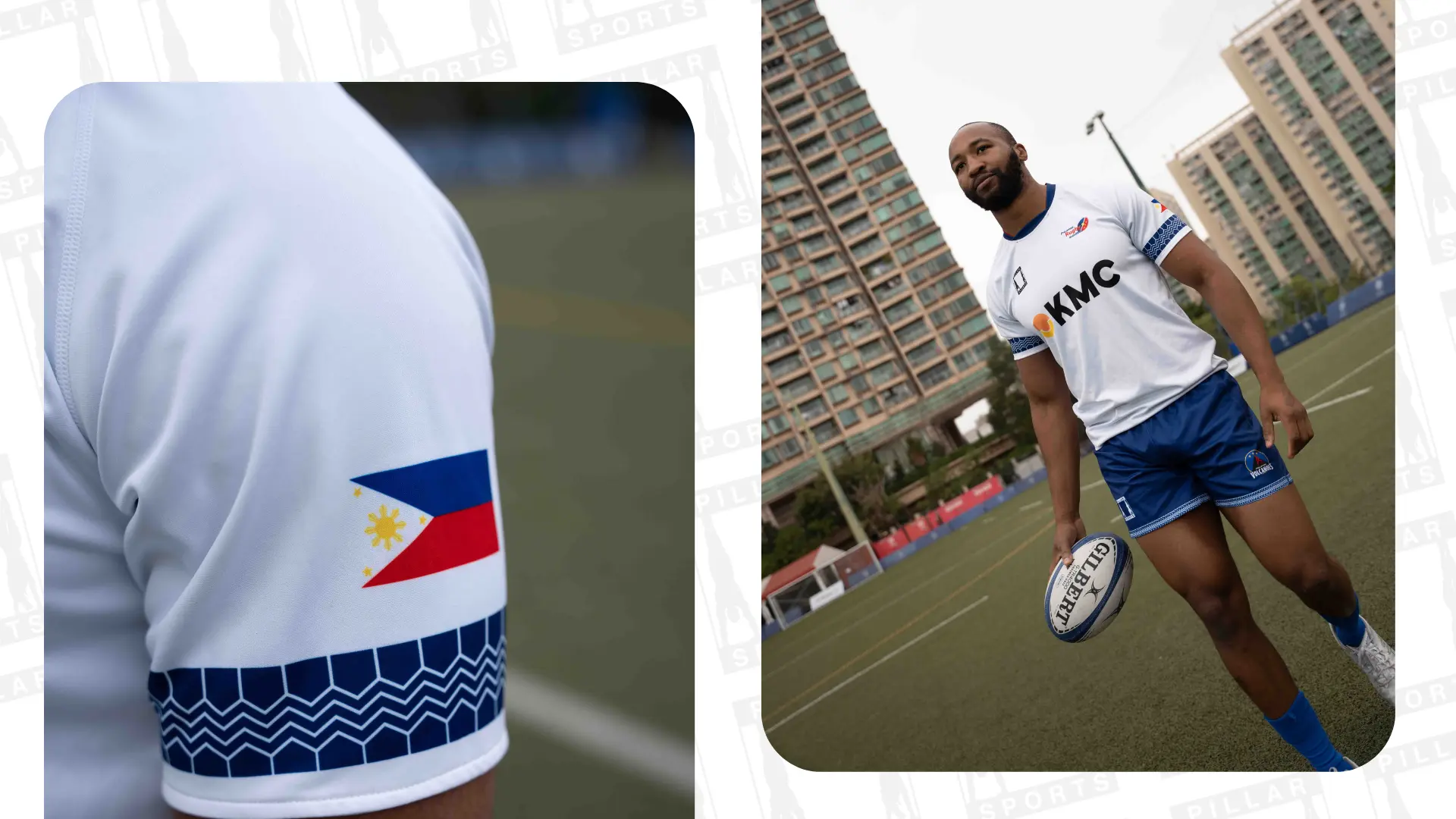
The team kit suppliers worth working with tend to share the same qualities, regardless of the sport or the volume.
They ask detailed questions before quoting. They provide fabric specs in writing without being asked. They can show you previous work at a comparable scale. They communicate consistently — not just when chasing payment. And they don’t hesitate to put their reprint and revision commitments in writing.
Suppliers who tick these boxes tend to deliver on time and produce kits that hold up. Suppliers who don’t tend to cause the problems you read about in club committee meetings.
At Pillar Sports, we supply custom sports apparel to clubs worldwide. Our minimum order is 10 pieces, and we use the same fabric specification for every client, whatever the order size., a staged production timeline, and previous work examples as part of every quote. If you’re evaluating suppliers, request a quote from us and see how the process works.
Frequently Asked Questions
Ask directly: what clubs have they produced kits for in your sport, and in what quantities? A credible supplier will have examples to show. If they can’t point to comparable work, factor that into your assessment.
Most sublimation suppliers work from 10 units per design. Below that, per-unit cost rises significantly. If your squad is smaller, it’s worth asking whether the supplier will accommodate it — some will, some won’t.
Both have tradeoffs. Local suppliers may offer shorter lead times and easier communication. International suppliers — particularly those in established manufacturing hubs — often offer more competitive pricing at club quantities. The most important factors are track record, communication quality, and whether they can meet your timeline. Where they’re based is secondary.
For small orders, some suppliers will decline sample requests or charge for them. In that case, ask for detailed photos of previous work, fabric composition in writing, and references from clubs who have used them. A sample garment is the ideal, but thorough documentation is an acceptable alternative for established suppliers with a clear track record.
Start evaluating suppliers at least 12 weeks before your target delivery date. That gives you time to get two or three quotes, run through the checklist above, and still leave 10 weeks for production and shipping once you’ve made a decision. Starting at six weeks means cutting corners on evaluation.
Final Thoughts
Sourcing custom sports apparel for your club is a process worth taking seriously. The right supplier makes the rest of the ordering process straightforward. The wrong one costs you time, money, and the kit your squad needed three weeks ago.
Ask the questions before you sign anything. Get the key terms in writing. And choose based on track record and communication quality — not just the cheapest quote.
Pillar Sports supplies sports team apparel custom-made for clubs worldwide, looking for a straightforward quoting process. Request a quote for your club to get started.
Sources: